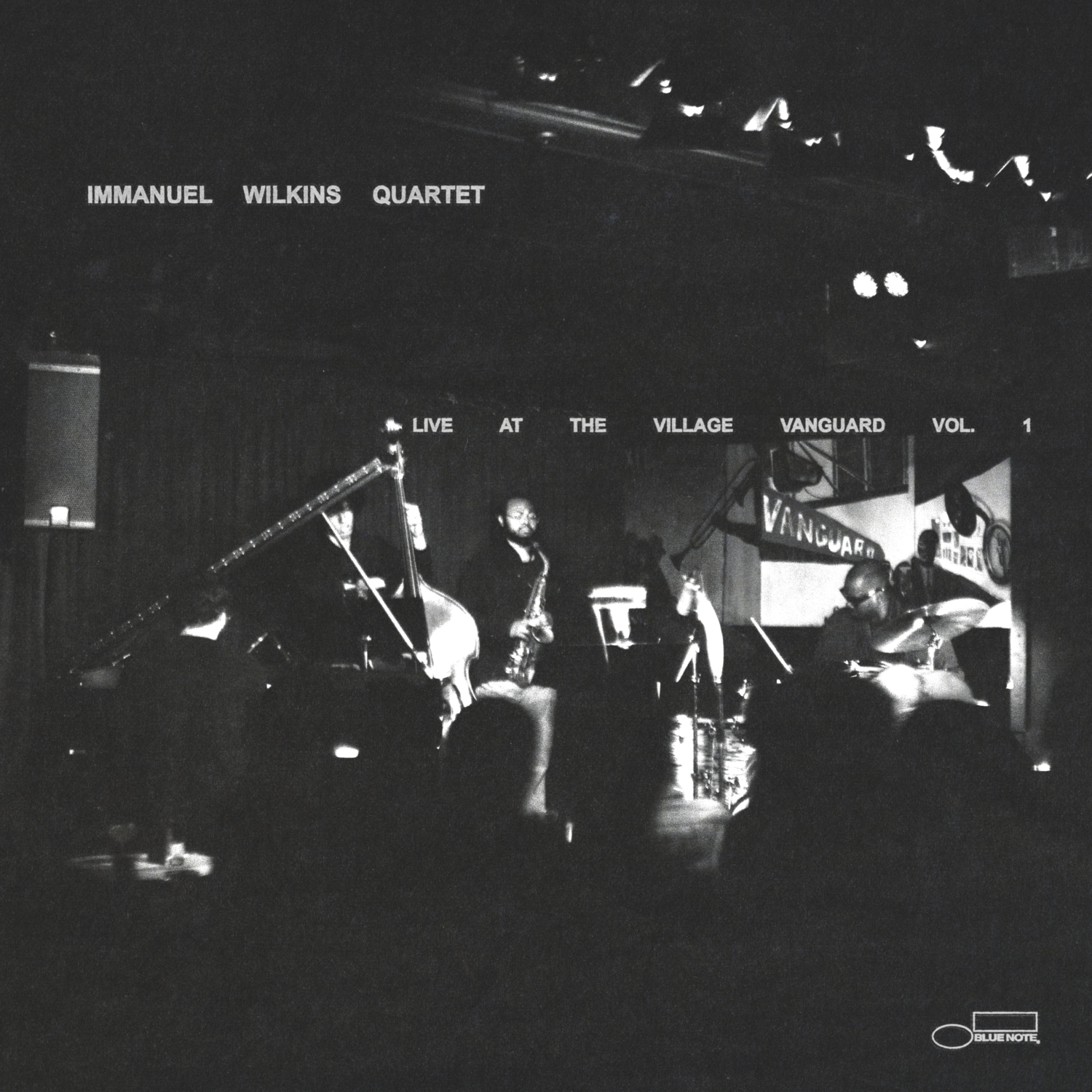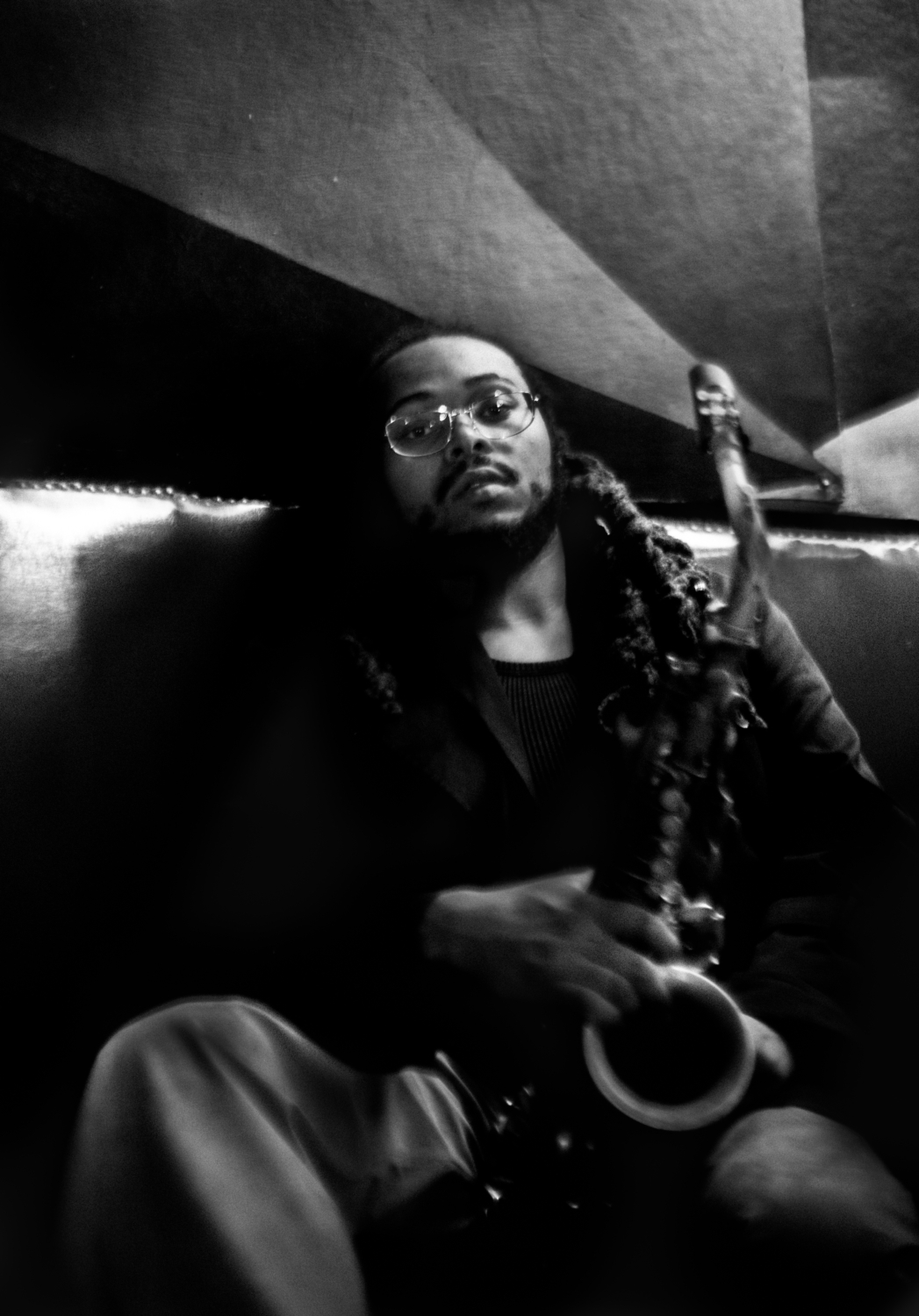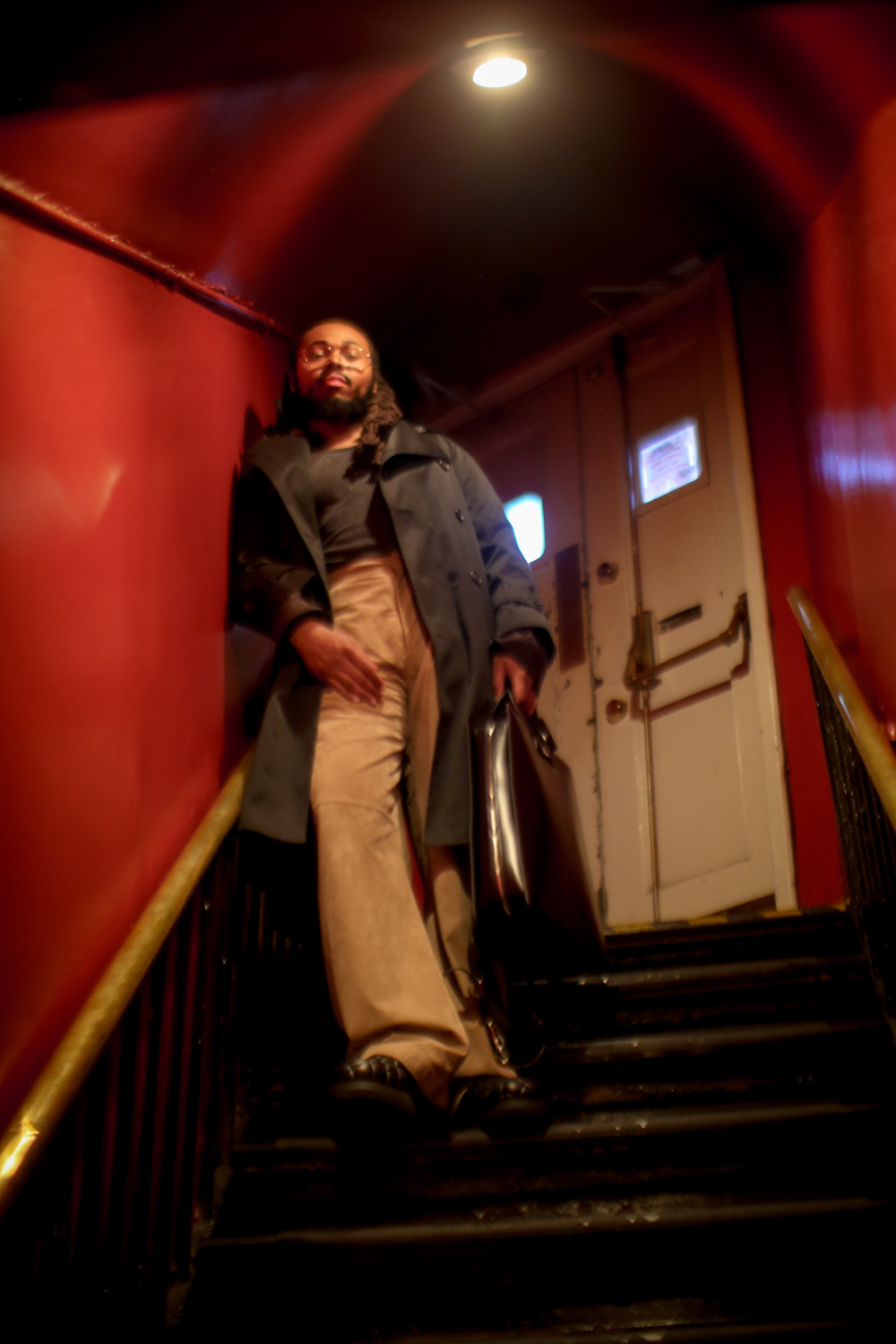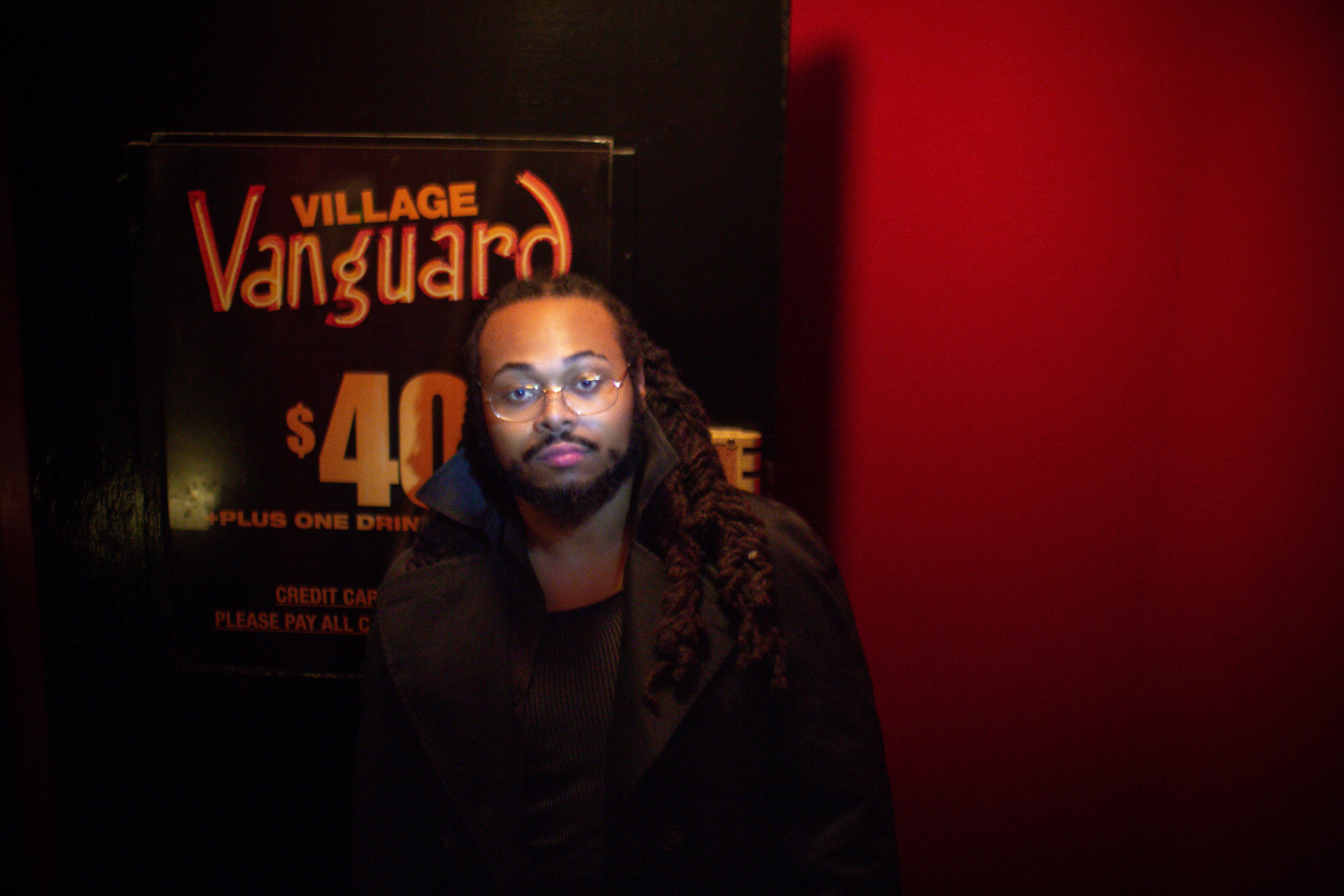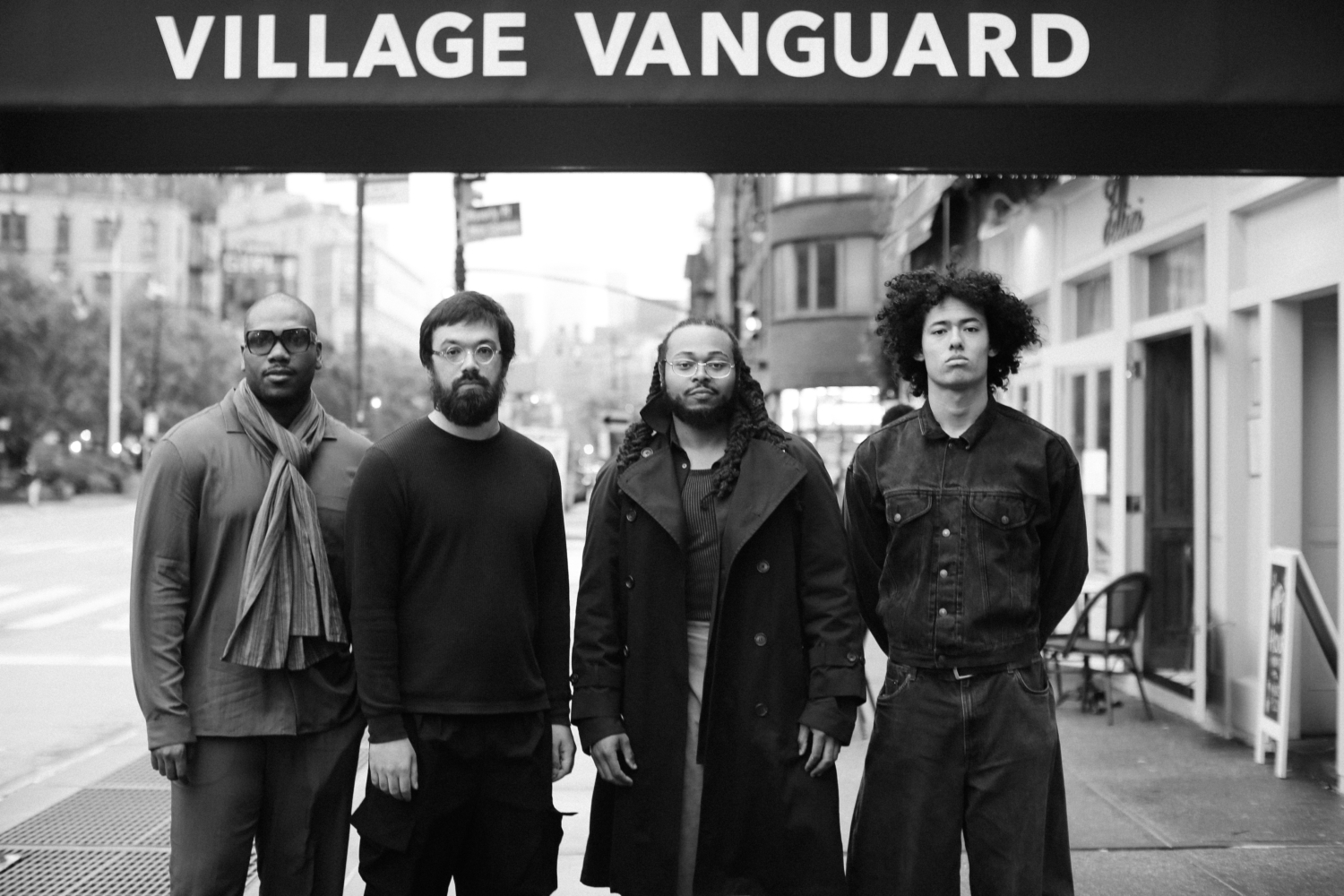
Immanuel Wilkins Quartet – Live at The Village Vanguard Vol. 1
- Warriors (14:15)
- Composition II (10:09)
- Charanam (18:05)
- Eternal (19:38)
All tracks by Immanuel Wilkins except 3. by Alice Coltrane
Immanuel Wilkins: alto saxophone / Micah Thomas: piano / Ryoma Takenaga: bass
Kweku Sumbry: drums
Produced by Immanuel Wilkins
Recorded by Tyler McDiarmid and Geoff Countryman at the Village Vanguard, NY
on May 15 & 16, 2025
Der GRAMMY-nominierte Altsaxofonist und Komponist Immanuel Wilkins veröffentlicht sein erstes Live-Album, das mitreißende, insgesamt dreiteilige Dokument gefeierter Konzerte in einer legendären New Yorker Jazz-Institution. Wilkins‘ Quartett, bestehend aus Micah Thomas am Klavier, Ryoma Takenaga am Bass und Kweku Sumbry am Schlagzeug, entfaltet in diesem von Jazz-Geschichte durchdrungenen Raum seine volle musikalische Kraft und reiht sich damit in die Liste der Jazzgrößen ein, die dort wegweisende Live-Aufnahmen gemacht haben, darunter John Coltrane, Sonny Rollins, Joe Henderson, Bill Evans und viele andere.
Vol. 1 erscheint am 20.03. digital, als LP + CD, Vol. 2 (17.04.) und Vol. 3 (15.05.) erscheinen ausschließlich digital.
LINER NOTES
When Immanuel Wilkins asked me to pen liner notes for his new live album, my immediate answer was: “You had me at liner.” I had seen a glorious set he played with Kenny Barron at the Village Vanguard a year before, where one of his solos has left me feeling like I’d heard the reincarnation of Ben Webster. But there’s something about the Vanguard that does that to you. It makes you feel the presence of so many performances that are still very much alive in the room.
It is precisely this ambitious sono-spatial experiment that Wilkins takes on in this album: channeling the essence of a location that has witnessed numerous legendary performances. From John Coltrane to Sonny Rollins, Bill Evans to Elvin Jones, Dizzy Gillespie to Dexter Gordon (to name just a few), the Village Vanguard is a place where the sonic history of jazz dwells in the walls, floorboards, and ceiling. It is a venue many describe as holding cumulative layers of musical genius from decades of jazz performances. Live at the Village Vanguard is a bold endeavor to summon the Vanguard’s sonic history and make it audible. It harnesses this legacy and reactivates it as what he defines as practice – a practice of improvisational sounding, congregational listening, and devotional ritual.
practice:
[transitive verb]
to do or perform often, customarily, or habitually;
to perform or work at repeatedly so as to become proficient;
to train by repeated exercises.
– Miriam Webster Dictionary
practice
[in improvisation]
working things out without a certain set of key variables;
a refusal of the conditions expected of your production;
when the intensity is high and the labor begins to yield this certain kind of beauty;
falling together forward.
– Immanuel Wilkins
For a native Philadelphian like Wilkins, ‘practice’ has a particular history – one famously invoked by Alan Iverson (aka., “The Answer”) with characteristic irony and pathos. And while the memory of his impassioned soliloquy still brings a smile to my face, the broader paradox he named is all too frequently overlooked. For as his virtuosic performances made clear, basketball is itself a dazzling display of physical improvisation where the game is its own form of practice.
As unlikely as it may seem, AI’s oft misunderstood notion of practice finds a contemporary echo in Wilkin’s enunciation of the relationship between improvisation, practice, and performance, as what South African pianist, Nduduzo Makhantini, calls a performance that is an ongoing rehearsal. Drawing inspiration from the sonic architecture of the Vanguard, Wilkins and his bandmates take the practice of improvisation as ongoing rehearsal to new levels of artistic sophistication in Live at the Village Vanguard.
The album’s opening track, “Warriors,” sets the stage. As the starting point for the group’s live set, it is an initiation for the listener and an invitation to participate in a certain kind of listening: listening in on, rather than listening to. It is listening in on what it sounds like to work out an incomplete form in and through improvisation. “Warriors” announces that we are embarking on a collective journey where performance is practice and practice is performance. Or in Wilkins’ words, it is listening in on an “ante-/anti-performance.”
As one of a group of twelve untitled compositions modelled on J.S. Bach’s Well-Tempered Clavier, “Composition 2” is a delicate enactment of a different kind of practice: the practice of developing an intimate relationship with a set of keys. Breathy and tender, supple and sublime, it sounds the unfolding, evolving relation among members of the band. Ryoma Takenaga’s bass whispers, Micah Thomas’ piano hums, Wilkins’ sax caresses, and Kweku Sumbry’s drums seem to hide in plain sight. The musicians are cautious yet curious and their performance exudes the feeling that something is being protected or withheld. It is a translation of opacity into sonic form.
On “Charnaram,” Wilkins and his bandmates elevate the congregational elements of Alice Coltrane’s Kirtan song into a devotional incantation. There is a circular motion to the group’s slow, rhythmic repetitions that transports me back to an evening in Salvador, Bahia, attending a Candomblé ritual ceremony. The relationship between Sumbry’s driving beat, Thomas’ expansive chords, and Wilkins’ spiraling solo recalls the circular walk of the Candomblé initiates as they navigated the room over and again, falling into entrancement and reemerging out of it. Here practice becomes a ritual repetition that transforms into an experience of spiritual awakening.
Wilkins describes “Eternal” as a song that evokes the temporal experience of a concert. It is a sonic rendering of durational jazz improvisation. The hypnotic cycle of a repeated eleven-note phrase extends for thirteen minutes of this eighteen-minute track. It is a low, slow extended loop that diminishes in volume while maintaining its full intensity as we drift toward a moment of closure that never quite arrives. “Eternal” makes us take stock of what it means to dwell in the ongoing-ness of improvisation as an endless practice of rehearsal as performance. Or as “The Answer” might say, it is simultaneously practice and the game itself.
By Tina M. Campt
Weitere Infos in unserem Presseportal unter
https://journalistenlounge.de – bitte dort über den Genrefilter „Jazz“ anwählen!
PR Radio
Universal Music Jazz (Deutsche Grammophon GmbH)
Mühlenstr. 25, 10243 Berlin
Blue Note / Universal Music
CD 00602488170826 / LP 00602488170871
VÖ: 20.03.2026
ALLE INFORMATIONEN UNTER EMBARGO BIS 18.02.2026