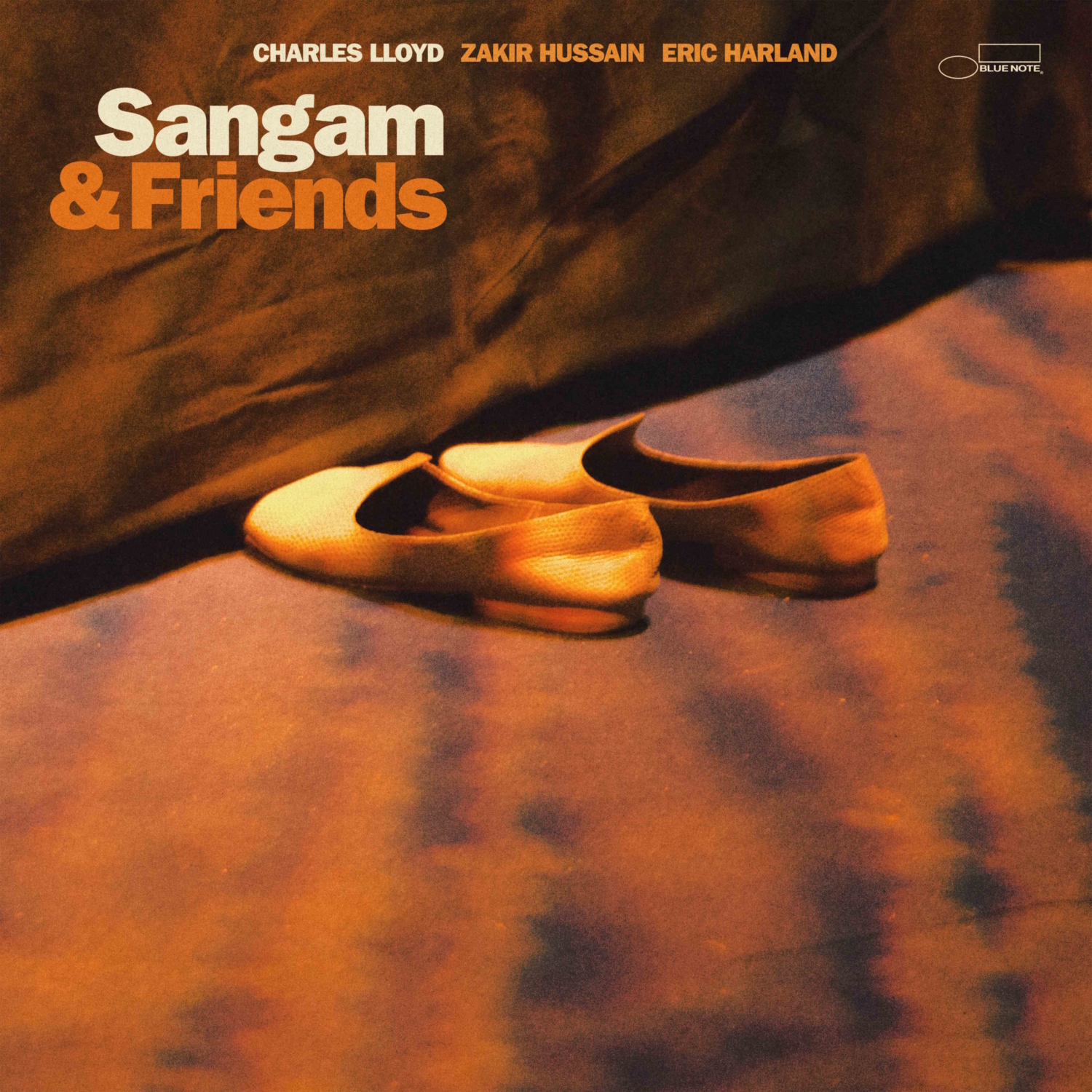
CHARLES LLOYD | ZAKIR HUSSAIN | ERIC HARLAND – Sangam & Friends
- Clear the Dust (1:25)
- The Blessing (11:03)
- Jai Ganga (5:09)
- Tagore (live) (6:23)
- Bharati’s Dance, Tempo Divine (8:09)
- Eternal Dreamer (6:03)
- Sam on the Ganges (7:13)
Sangam Charles Lloyd: Tenor & Alto Saxophone, Flute / Zakir Hussain: Tabla, Percussion / Eric Harland: Drums, Tongue Drum, Percussion Friends Rakesh Chaurasia: Bansuri / Ranjit Barot: Keyboard / Niladri Kumar: Sitar, Electric Sitar / Sabir Khan: Sarangi / Vijay Prakash: Vocals
All tracks by Charles Lloyd except 03: Traditional, arranged by Charles Lloyd
Produced by Dorothy Darr
Recorded by Ashish Manchanda at Nirvana Studio, Mumbai, India (1, 2, 6, 7)
Recorded by Emam at Eternal Music, San Francisco, CA (3)
Recorded live by Adam Camardella at The Lobero Theatre, Santa Barbara, CA (4)
Recorded by Dom Camardella at Santa Barbara Sound Design, Santa Barbara, CA (5)
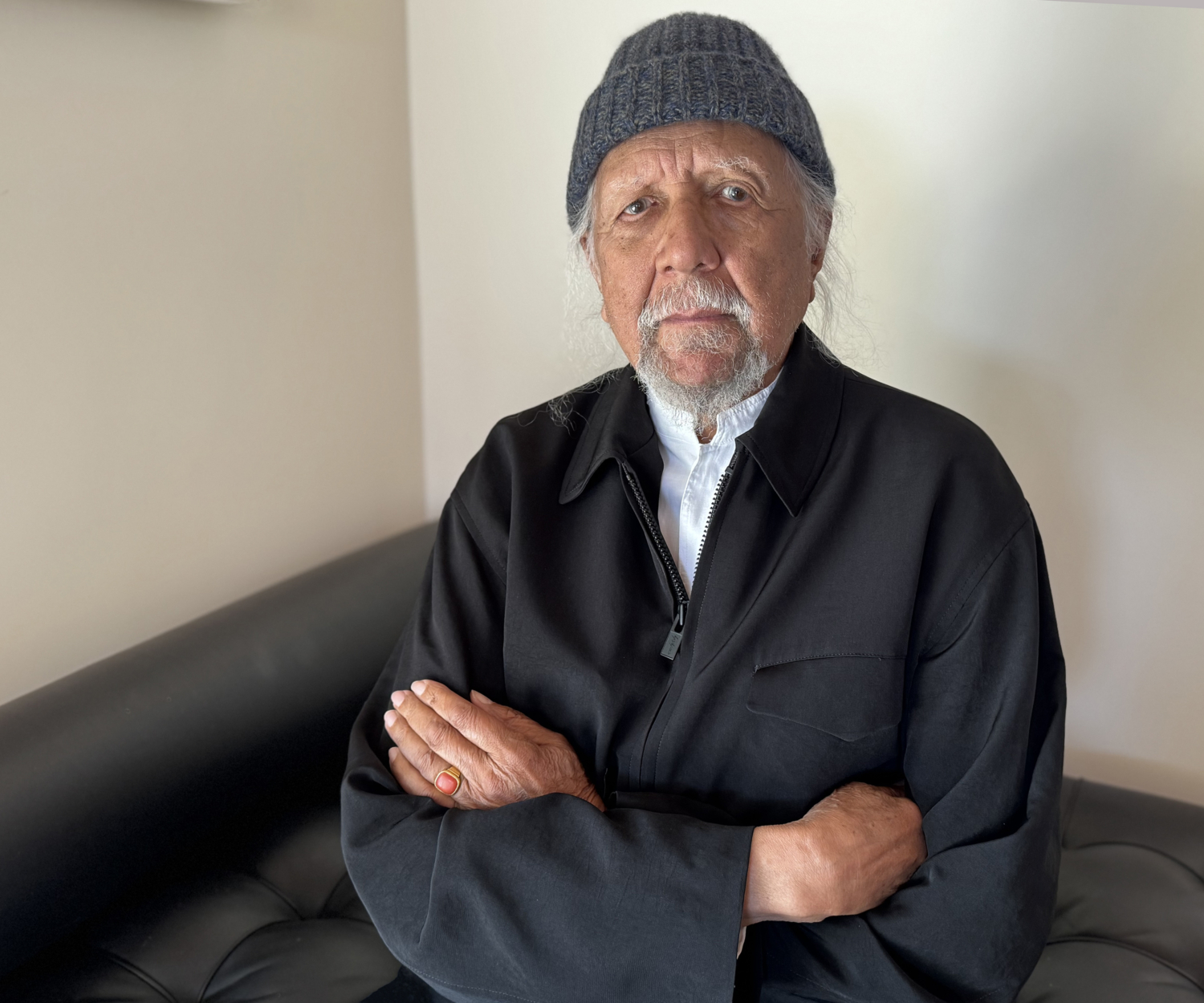
Der 88-jährige Charles Lloyd zählt noch immer zu den bedeutendsten Jazzmusikern seiner Generation. Seit den 1960er-Jahren prägte er mit seinem unverwechselbaren Saxofonspiel, seiner spirituellen Offenheit und stilübergreifenden Musiksprache die Entwicklung des modernen Jazz. Mit “Sangam & Friends“ würdigt er jetzt die außergewöhnliche musikalische und persönliche Verbindung zu seinem langjährigen Freund und Weggefährten Zakir Hussain. Die Wurzeln dieser Zusammenarbeit reichen Jahrzehnte zurück – bis zu Lloyds ersten Begegnungen mit indischer Musik in den 1950er-Jahren und seiner lebenslangen Faszination für deren spirituelle und künstlerische Traditionen.
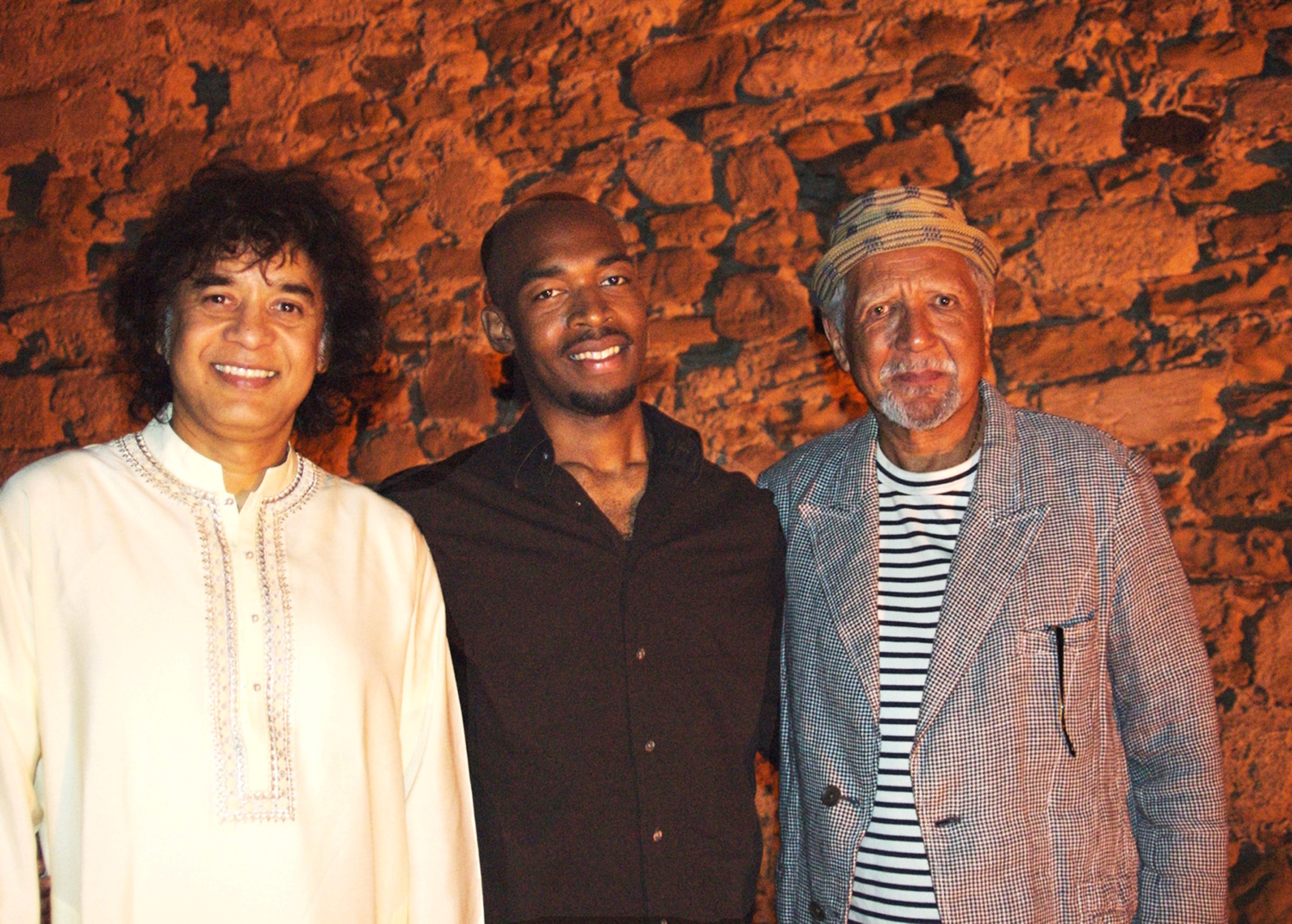
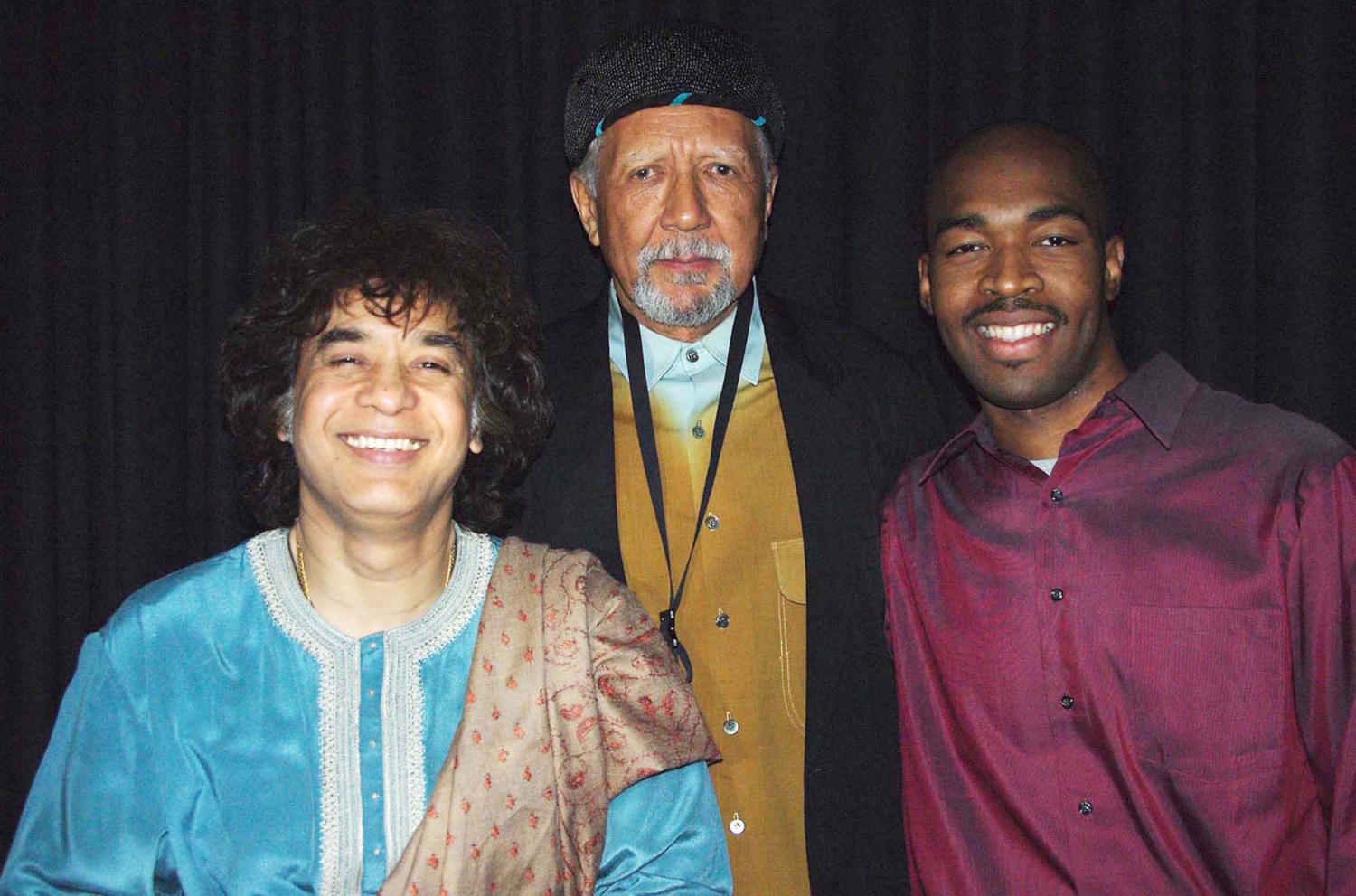
Im Zentrum des Albums stehen bislang unveröffentlichte Aufnahmen, die 2009 in Mumbai entstanden, als das Sangam-Trio – Charles Lloyd, Zakir Hussain und Eric Harland – im Anschluss an Hussains jährliches “Abbaji“-Konzert gemeinsam mit herausragenden Musikerinnen und Musikern der indischen Klassik ins Studio ging. Mit dem Carnatic-Sänger Vijay Prakash, Bansuri-Meister Rakesh Chaurasia, Sarangi-Spieler Sabir Khan, Keyboarder Ranjit Barot sowie Sitar-Virtuose Niladri Kumar entstand ein einzigartiger musikalischer Dialog zwischen Jazz und den reichen Traditionen des indischen Subkontinents.
Benannt nach dem Begriff “Sangam“, dem Zusammenfluss mehrerer Flüsse, steht “Sangam & Friends“ sinnbildlich für die Begegnung von Kulturen, Klangwelten und spirituellen Strömungen. Nach dem Tod Zakir Hussains im Dezember 2024 erhalten diese Aufnahmen eine zusätzliche emotionale Dimension: Sie dokumentieren nicht nur eine außergewöhnliche künstlerische Begegnung, sondern auch eine tiefe Freundschaft, deren Vermächtnis in dieser Musik weiterlebt.
LINERNOTES
Tap root in the blues of Mississippi
Ears, mind, heart pulled toward the East.
Sails unfurled,
I navigate the waters in search of One.
CL
Providence
As we tossed around names for the newly formed trio of Charles, Zakir and Eric — Zakir suggested Sangam, “It is the confluence of three rivers,” he explained. “Of course,” Charles interjected, “the Ganges, the Rio Grande and the mighty Mississippi.”
In ancient India, it is where the Jamuna, the Ganges, and the mythical Saraswati meet. The mystical thread that connects us spans generations and centuries. Like a river as it flows to the sea, the tempo is unpredictable — meandering around sunken banks of red clay, freefalling over the face of a cliff, roaring jubilantly through rock formations, slowing, pensively, as it widens across a final, broad, floodplain and merges with the vastness of the sea.
For Charles, the flow of confluence began decades earlier at University of Southern California in Los Angeles when he first heard Ravi Shankar and Alla Rakha in 1957. It opened his ears to an expanded universe of sound that kept expanding through the 60s as he listened to the Ali Brothers, Ali Akbar Khan, and other musicians from India who began traveling more widely to the US. He was drawn to the writings of Hazrat Inayat Khan and charmed by the poetry of Rabindranath Tagore. We hear this evolution of ideas on his 1963 recording with Chico Hamilton, “Man From Two Worlds.” In the early 1970s, Charles invited Ali Akbar Khan’s sons, Aasheesh and Pranesh, to record on his album “Geeta,” pulling the thread of inspiration from the East further into his own work.
A long leap forward to November 2000. John McLaughlin sent us a message to say he would love to have Charles come to his “Remember Shakti” concert at UCLA’s Royce Hall. Charles and John had become friends decades earlier — both were spiritual seekers with an ear toward India.
Hearing “Remember Shakti” in concert opened another floodgate of inspiration for Charles. The Mississippi blues painted in ancient, soulful hues and melodic rhythms of India. The great Alla Rakha’s son, Zakir Hussain, was playing tabla. When he and Charles met backstage after the concert, Zakir said “I wanted to be on your album “Geeta” !” Through the son, Charles connected directly to the father he had heard as a teenager in Los Angeles. Confluence.
Indelibly woven into this tapestry with its colorful warp and weft, is Master Billy Higgins. A kindred spirit on the journey whose deep friendship and collaborations spanned over five decades. As teenagers in Los Angeles to New York City in their 20s and back to California many decades later. Shortly before Master Higgins left us in May 2001, he tenderly said to Charles “I won’t always be there, but I’ll always be with you.”
Several months later, while in NYC to start a week at the Blue Note — September 11 happens. At the end of that apocalyptic week they opened their doors for locals below 14th Street. Charles heard Eric Harland for the first time in the Blue Note afterhours band. He took note, knowing that Master Higgins had sent him a message.
Randal Kline, of SFJAZZ, had presented Charles and Billy as a duo at the Masonic Temple in 1997 — he has a keen ear for unusual pairings, and following Billy’s death, he invited Charles to present a duo concert with Zakir at Grace Cathedral in October of 2001, just weeks after 9/11. When we arrived in San Francisco to meet up with Zakir for this first collaboration, the air was tense.
There had been threats to blow up the Golden Gate Bridge that afternoon. Zakir had to drive over this bridge to get to San Francisco. Midway through the concert, Zakir said in his mellifluous voice, “Music is about building bridges, not destroying them.”
The memory of Eric’s sound lingered with Charles over the next year, until he invited him to join his quartet. On an occasion to pay homage to his dear friend, Master Higgins in 2004, Charles decided to do so by inviting both Zakir and Eric to perform with him. A magical confluence took shape. Not long after, the album, “Sangam” released on ECM soon followed.
In 2009 Zakir brought Charles to India to be part of his annual “Abbaji” concert which honors his father, Alla Rakha. Experiencing India for the first time was intense and magnificent — Mumbai is a mass of humanity, with multilayers of sound, resplendent colors, and exotic flavors. It resonated with us on every level.
On the night of the “Abbaji”concert, Sangam was joined on stage by a myriad of musicians and instruments — the haunting cry of the many stringed saragngi, sylvan and luminous melodies from the bansuri, the most classic of Indian sounds emanating from a sitar — and voice. In the days following the musical offering to Alla Rakha we went to Nirvana Studio to delve deeper into the waterfalls and eddies that had been stirred up.
Most of this recording was made over a day in February 2009. It is the document of an extraordinary gathering; Rakesh Chaurasia on bansuri, nephew of the legendary bansuri master, Hariprasad Chaurasia, Carnatic singer, Vijay Prakash, Sabir Khan on sarangi, the son of another legend, Ustad Sultan Khan, along with wide ranging percussionist, composer, arranger, Ranjit Barot, on keyboard, and a kindred spirit, Niladri Kumar, on sitar and electric sitar. “Clear the Dust,” “The Blessing,” Eternal Dreamer,” “Sam on the Ganges,” (a redux of “Sombrero Sam”) were recorded in Nirvana Studio. We had agreed to meet again, one day, in the studio to complete the album – the Universe had other plans. “Jai Ganga,” “Tagore,” and “Bharati’s Dance” are from the Sangam archives.
On December 15, 2024 Zakir flowed out of this realm and merged with the sea of the infinite. He leaves us here to be the reporters about this destined confluence of the Ganges, the Rio Grande, the Mississippi and some of their tributaries — about this flow of pure bhakti. Love. The best way to convey that beauty and depth of Spirit is to hear it. This is our homage to Zakir.
—Dorothy Darr, March 2026
Thou hast vanished from my reach
leaving an impalpable touch in the blue of the sky,
an invisible image in the wind moving
among the shadows.
Rabindranath Tagore
Weitere Infos in unserem Presseportal unter
https://journalistenlounge.de – bitte dort über den Genrefilter „Jazz“ anwählen!
PR Radio
Universal Music Jazz (Deutsche Grammophon GmbH)
Mühlenstr. 25, 10243 Berlin
Blue Note / Universal Music
LP 00199957635660 / CD 00199957662239
VÖ: 24.07.2026