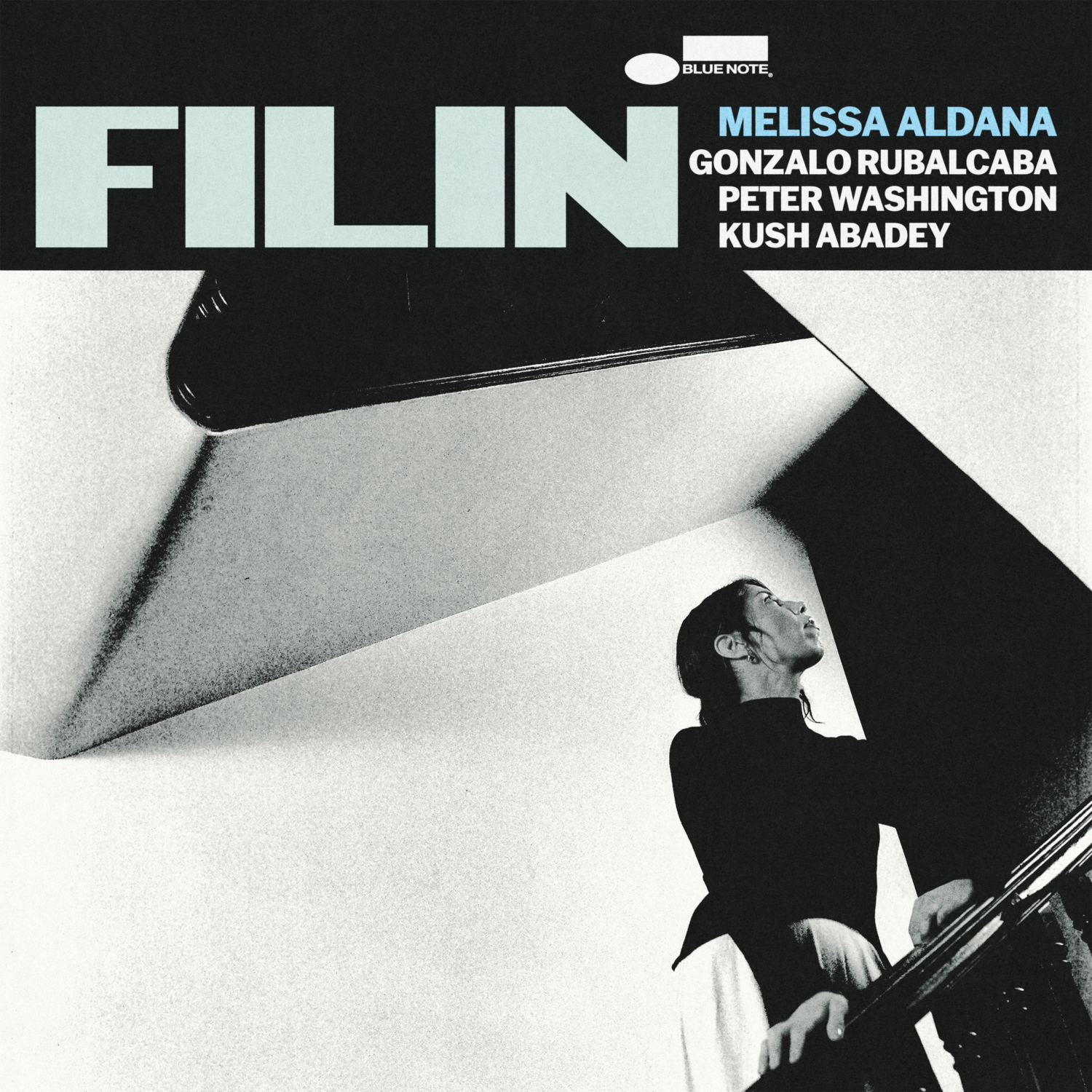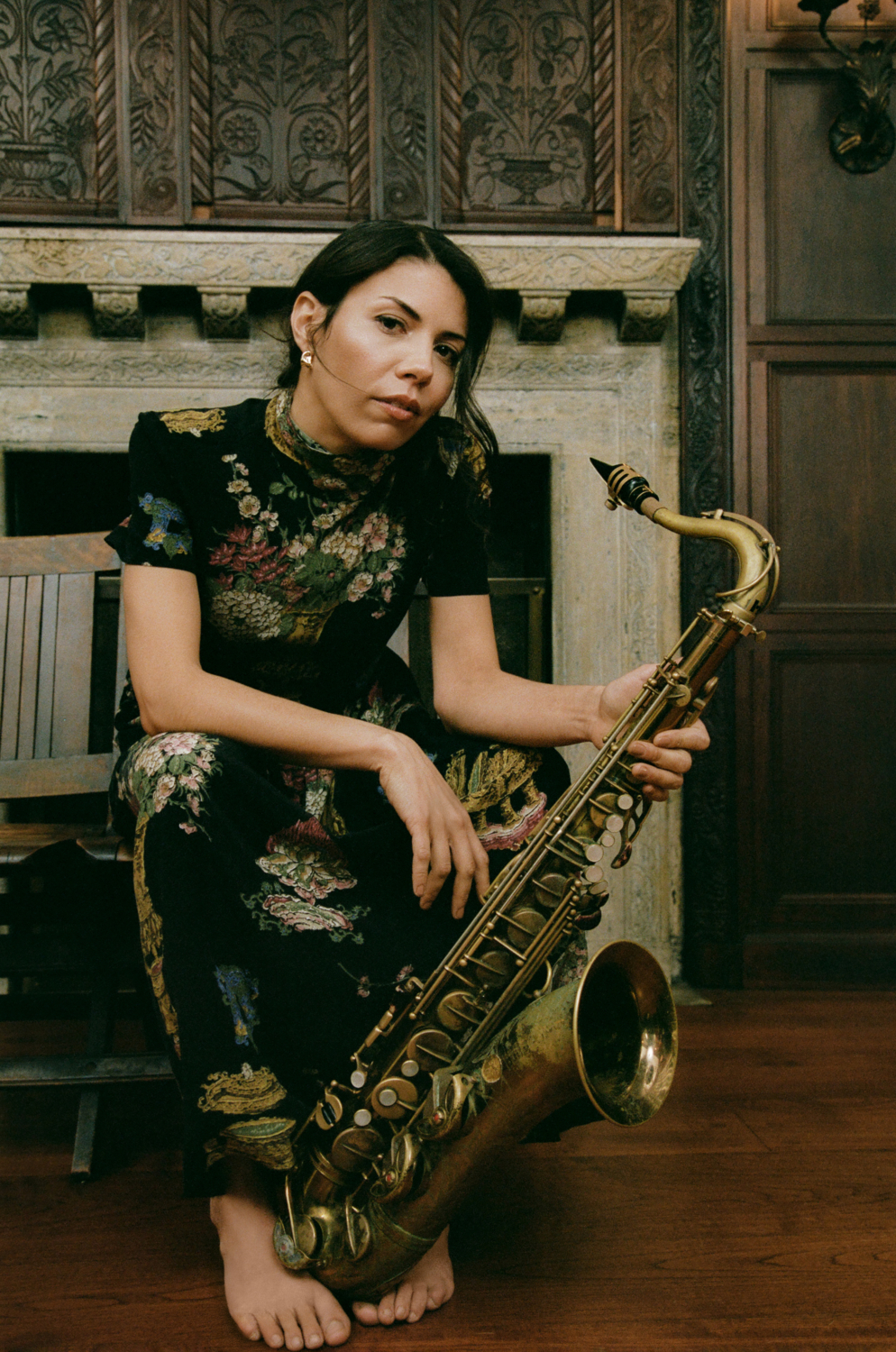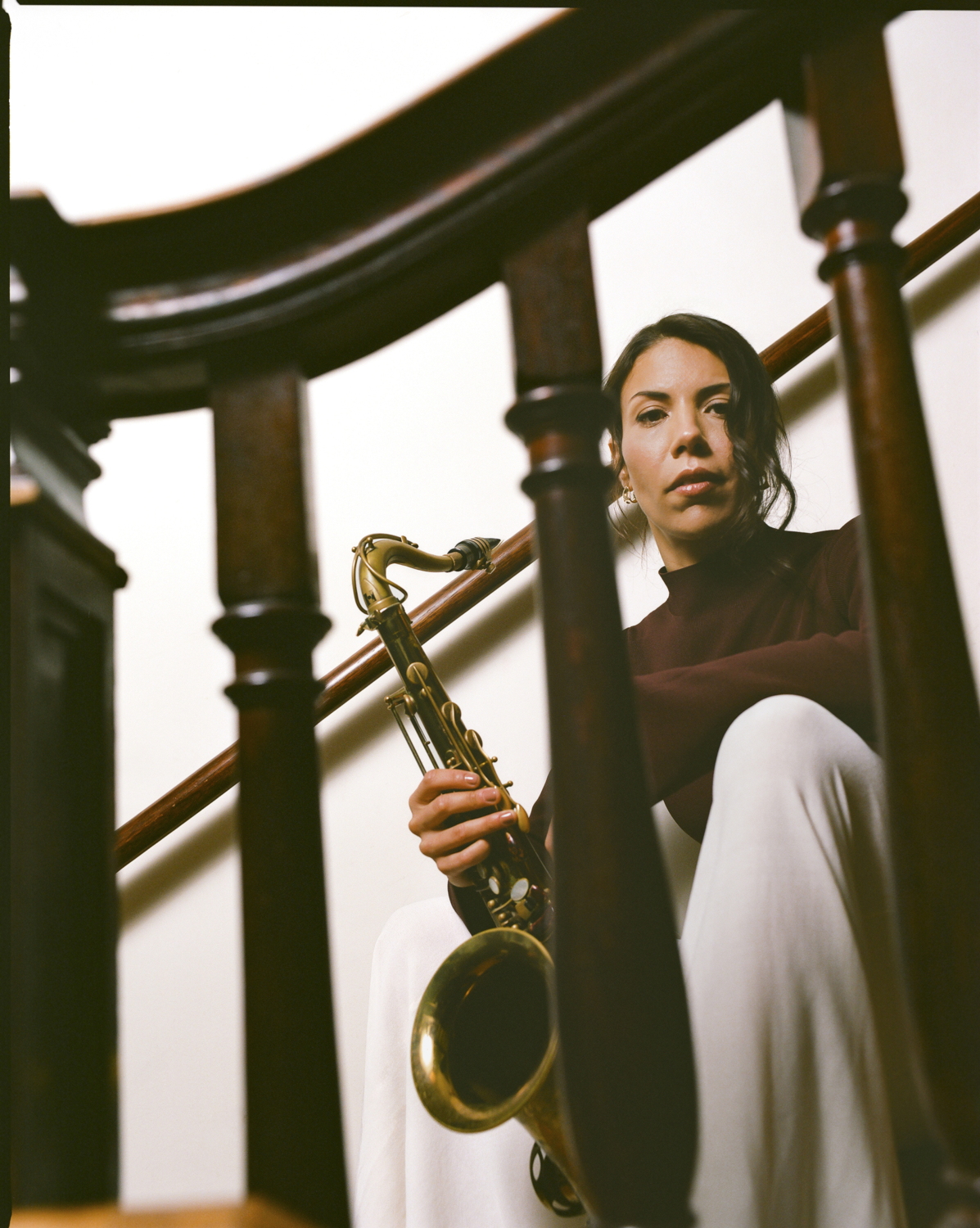
Melissa Aldana – Filin
** SPERRFRIST: alle Infos unter Embargo bis 07.01.2026 **
- La Sentencia – 4:38
(Salvador Levi) - Dime Si Eres Tú – 4:00
(Cesar Portillo De La Luz) - No Te Empeñes Más – 5:11
Featuring Cécile McLorin Salvant
(Marta Valdes)
- Imágenes – 4:38
(Frank Dominguez) - Las Rosas No Hablan – 4:33
Featuring Cécile McLorin Salvant
(Cartola)
- Little Church – 5:01
(Hermeto Pascoal) - Ocaso – 4:36
(Claudio Estrada)
- No Pidas Imposibles – 6:22
(Frank Dominguez)
Melissa Aldana: Saxophone
Gonzalo Rubalcaba: Piano / Peter Washington: Bass / Kush Abadey: Drums
Cécile McLorin Salvant: Vocals on Tracks 3 & 5
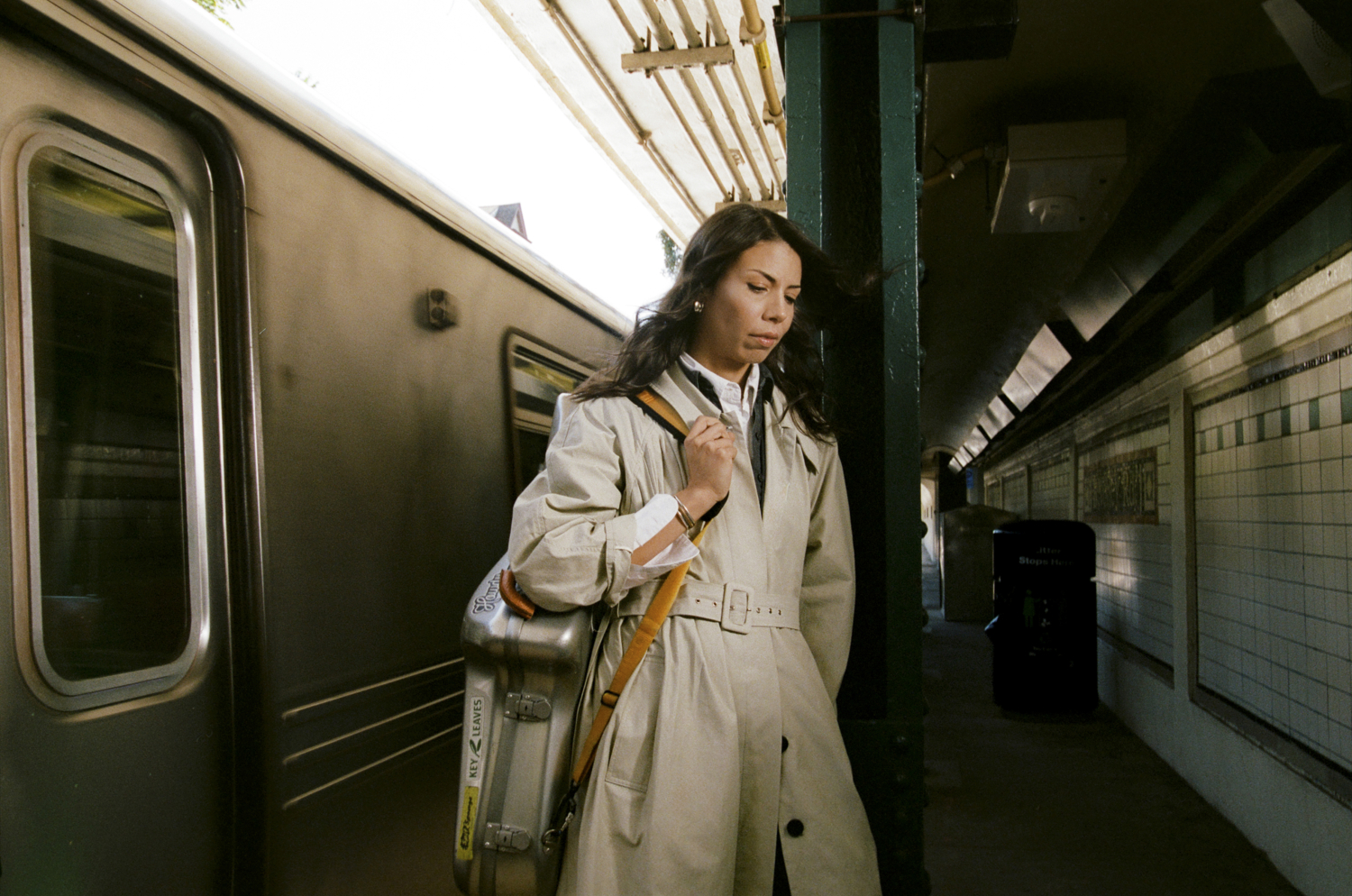
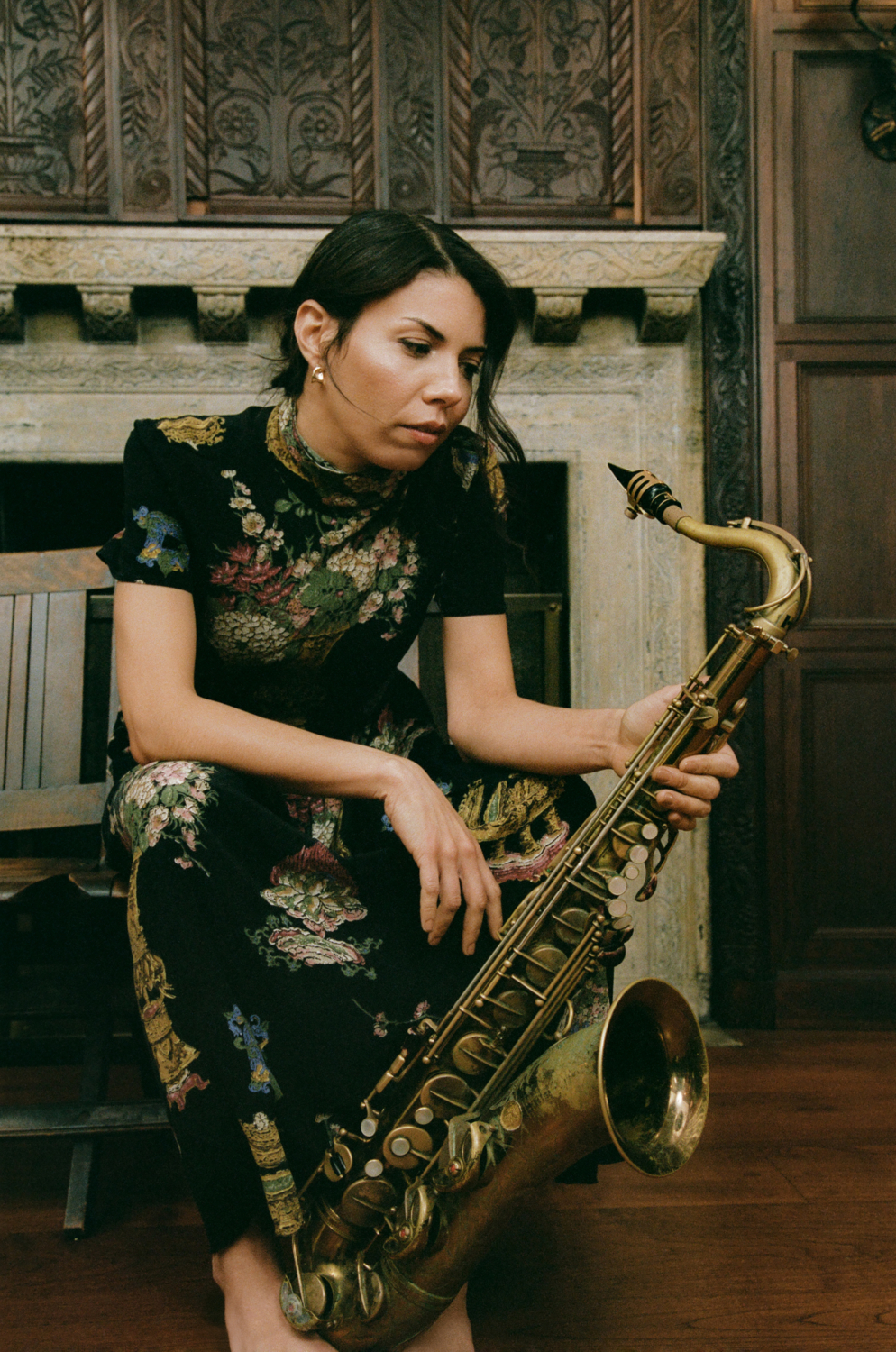
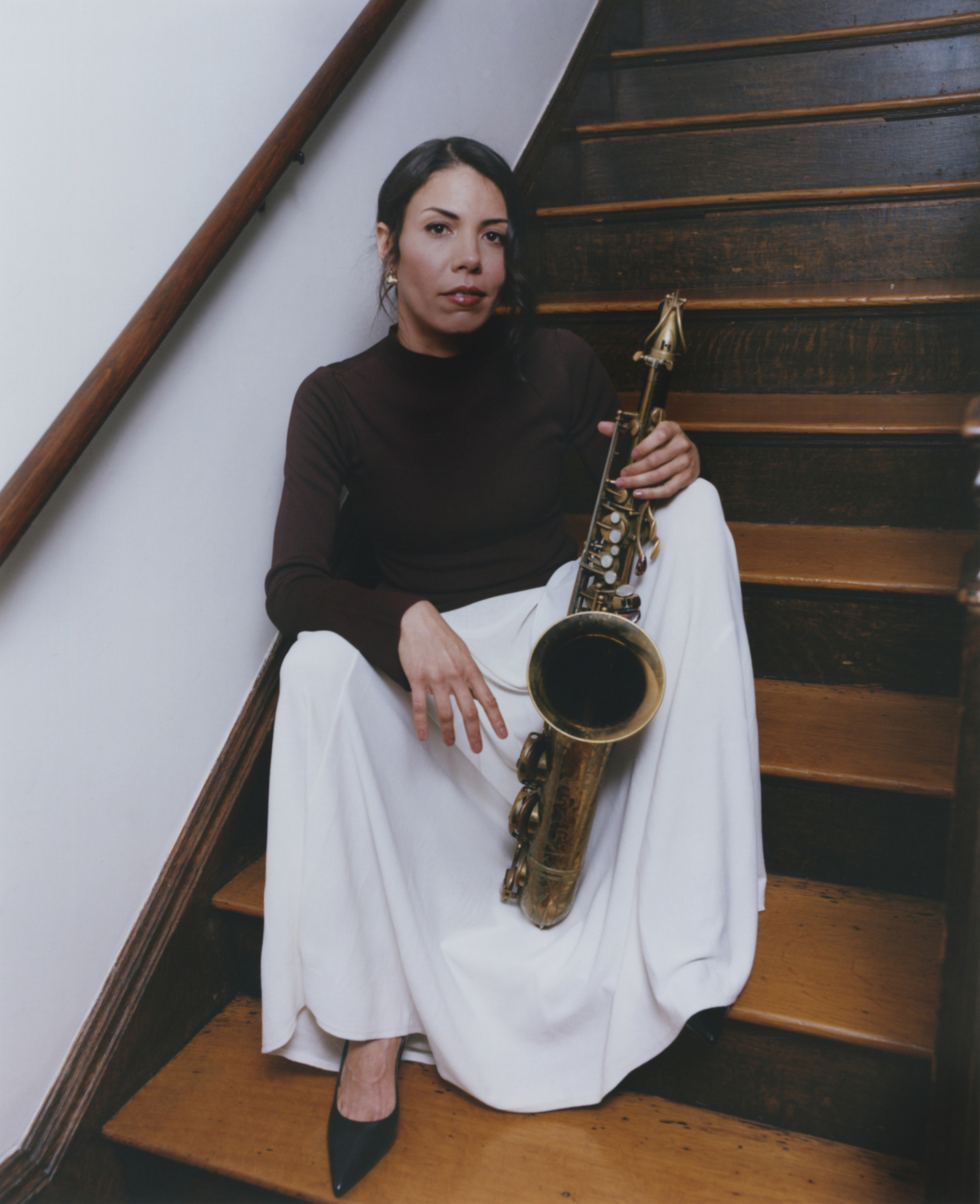
Saxofonistin Melissa Aldana lässt ihrem GRAMMY-nominierten Blue Note-Debüt „12 Stars“ (2022) und dem Nachfolgealbum „Echoes Of The Inner Prophet“ (2024), zwei von der Kritik begeistert aufgenommenen spirituellen Modern-Jazz-Werken, mit ihrem dritten Blue-Note-Album „Filin“ jetzt ein ebenso beeindruckendes Balladenalbum mit Liedern aus der kubanischen Filin-Musiktradition folgen, interpretiert im Quartett mit dem Pianisten Gonzalo Rubalcaba, dem Bassisten Peter Washington und dem Schlagzeuger Kush Abadey sowie der Gastsängerin Cécile McLorin Salvant.
Seit ihren Anfängen als Musikerin hegt die in Chile geborene Aldana den Wunsch, ein Balladenalbum aufzunehmen. Mit Vorbildern wie John Coltranes Albumklassiker „Ballads“ von 1963 als Leitstern sah sie in einem Projekt mit langsamen Tempi eine Möglichkeit, ihre lebenslange Suche nach dem perfekten Sound weiter voranzutreiben.
Melissa Aldana wurde in Santiago, Chile geboren und wuchs in einer musikalischen Familie auf. Sowohl ihr Vater als auch Großvater waren Saxofonisten, sie selbst nahm das Instrument im Alter von sechs Jahren unter der Anleitung ihres Vaters Marcos auf. Aldana begann auf dem Altsaxofon, beeinflusst von Künstlern wie Charlie Parker und Cannonball Adderley, wechselte aber zum Tenor, als sie zum ersten Mal die Musik von Sonny Rollins hörte. Als Teenagerin trat sie in Jazzclubs in Santiago auf und wurde 2005 von Pianist Danilo Pérez eingeladen, beim Panama Jazz Festival aufzutreten.
Aldana zog in die USA, um das Berklee College of Music zu besuchen, ein Jahr nach ihrem Abschluss veröffentlichte sie 2010 ihr erstes Album „Free Fall“ auf Greg Osbys Label Inner Circle, gefolgt von „Second Cycle“ im Jahr 2012. 2013 wurde sie mit 24 Jahren die erste Instrumentalistin und südamerikanische Musikerin, die die „Thelonious Monk International Jazz Saxophone Competition“ gewann. Spätestens seit ihrem ersten Blue-Note-Album im Jahr 2022 gehört Aldana zur Spitze der internationalen Jazzszene.
INFO
For as long as she’s been a recording artist, the Chilean-born tenor saxophonist Melissa Aldana has wanted to make a ballads record. With archetypes like John Coltrane’s classic 1963 LP Ballads as her North Star, Aldana saw a slow-tempo project as a way to advance her lifelong quest for sound.
Not volume, or technical flash, or even advanced harmonic exploration, but sound: the way the overtones of her tenor can caress an aching melody; the way the sonic presence of her saxophone can move throughout a room, filling it from top to bottom with shifting colors.
“I transcribe Sonny Rollins, Wayne Shorter, John Coltrane, Joe Henderson, Lester Young, Charlie Parker, and Don Byas, among many others. For them the sound itself is a tool to express an emotion,” she explains. “Every single note is a whole world. So there is a technical side to playing, but then there is this mystical side of sound that… I still don’t know exactly what it is.” A ballads record, she believed, would help her burrow deeper into the essence of her sound.
But how could she approach the concept in a way that’s true to her unique vision? Over the past 15 years, Aldana has moved from one strikingly personal project to the next, matching her reputation as a brilliant, diligent saxophonist with her ever-growing gift as a storyteller. A rote exercise in jazz standards simply wouldn’t do.
To start, she reached out to the revered pianist and composer Gonzalo Rubalcaba, one of her “biggest heroes” and an artist she has longed to work with at project-length. His suggestion proved a revelation: Aldana should interpret the filin music of his native Cuba, a gorgeous yet still-unheralded tradition of richly arranged romantic song that thrived between the late 1940s and early 1960s. Filin — the word derives from “feeling” — “created a dialogue between traditional Cuban trova, the bolero and jazz, redefining Cuban musical identity,” Rubalcaba explains. “Filin elevated lyrics to a level of greater poetic and colloquial intimacy, and gave rise to instrumentalists and singers of great virtuosity and creative elegance.”
Born in Havana in 1963, Rubalcaba grew up surrounded by professional musicians, and met many of the titans of filin as a child — among them the guitarist and composer Ñico Rojas, the pianist and composer Frank Domínguez, and the singers Omara Portuondo and Elena Burke. The style enjoyed a vital omnipresence throughout his upbringing, and its impact on his own music has been profound. “Filin, its repertoire and nature,” he says, “remains a compositional reference that I constantly return to.”
To Aldana, filin songs presented a deeply meaningful new ideal: They reminded her of the lovelorn standards she’d internalized as a jazz saxophonist, but with lyrics sung in her native tongue. “They felt like the ballads that I love from the Great American Songbook,” she says, “but because the lyrics are in Spanish, I was able to connect to these songs in a way that I never thought I could.”
With Rubalcaba as her guide, she began exploring the history of filin music and working with him to pare down the songs that spoke to her. A plan coalesced: Rubalcaba would craft the arrangements and play piano, alongside the rhythm tandem of bassist Peter Washington and drummer Kush Abadey. Aldana’s dear friend, the best-of-generation vocalist Cécile McLorin Salvant, would sing on two numbers, and Blue Note Records President Don Was would produce, offering his trademark oversight, at once discerning, empathic and open.
Aldana put the repertoire through the same in-depth process she employs on all of her projects, carefully transcribing the melodies from vocal versions while also learning the lyrics and their intent. All the musicians recorded Filin together in the same room, without an overabundance of rehearsal. “There is something about being able to feel the person next to you,” she says. “There’s a magic that doesn’t happen when you just have the headphones.”
The end product is, in a word, stunning. It’s also unlike anything else in Aldana’s catalog — or in 21st-century jazz on the whole. Throughout these eight tracks, the ensemble enacts a kind of stirring and emotional minimalism — a quiet intensity that places paramount importance on Aldana’s radiant delivery of the melody. This music moves slowly, simmering forward with great deliberation and restraint, which is all the more impressive once you consider the runaway virtuosity these players are capable of.
The arrangements, of course, are deceptively simple rather than truly elementary. “Working with Gonzalo,” Aldana says, “I learned about the importance of details, and of focus. I always think about details, but this kind of next-level musicianship was something I hadn’t experienced.”
Perhaps most remarkable, however, is the fact that this incredibly patient program is never less than compelling; like great cinema, it holds its audience rapt without bells and whistles. When Aldana solos, she plays in a way that contrasts the longform harmonic probings she’s best known for. Her improvising here is mellifluous and moves like gossamer, with a newfound focus on accenting the core tunefulness. “I wasn’t trying to play the perfect jazz solo,” she says. “I was just trying to play inside the band — to leave space and be as present as I could, let the songs breathe. I’m older too, so I might be feeling less like I have something to prove.”
Filin is the sort of record you live with — the kind of timeless jazz LP you can use to bookend your day.
It follows that the album is expertly ordered and paced. Filin opens with the breathtaking melody of “La Sentencia,” by the bolero Salvador Levi co-written with Ela O’Farrill, followed by “Dime Si Eres Tú,” a ballad by Cesar Portillo de la Luz, one of filin’s absolute pioneers. (Listen for the sustained outro, a solo clinic in brushes playing by Abadey. As an arranging decision, it’s an elegantly bold, even provocative, move.)
Marta Valdez’s torch song “No Te Empeñes Más,” which features a stunning vocal performance by Salvant, is a song that Aldana recalled her mother playing around the house. The saxophonist was also impacted by the version Rubalcaba recorded with Joe Lovano in 2000, for the Charlie Haden album Nocturne. Frank Domínguez’s “Imágenes,” which Aldana first fell in love with through the recording by guitarist-singer Pablo Milanés, closes out Side A.
“Las Rosas No Hablan,” by the Brazilian samba innovator Cartola, was a Rubalcaba selection, though Aldana was familiar with its forlorn beauty from hearing Anat Cohen perform it. Here, Salvant sings the lyrics in Spanish, translated from the original Portuguese. “Little Church” was written by another Brazilian genius, Hermeto Pascoal, and is best known from the electric Miles Davis double LP, Live-Evil. In Aldana’s hands, the composition is pure poignant lyricism, devoid of the eerie surreality that defines the Miles version. (At the core of that atmosphere of unease is Pascoal’s famous whistling.) “This is my favorite track on the album,” says Aldana, “and a song I’ve been playing for a little while with my own band. I just had to record it. I was really thinking hard about how to approach it, and the first person who came to mind was Wayne Shorter.”
The two closing numbers, José Antonio Méndez’s “Ocaso” and Frank Domínguez’s “No Pidas Imposibles,” come off especially like ravishing midcentury jazz and pop standards. But, Aldana reiterates, “I felt so much closer to this music. The way that these musicians play the melodies and sing, because of the language, is so different than with American standards. These singers often seem to float above the lyric, with a sense of time that’s freer, flowing.”
“I also just felt in my gut that I wanted to do a ballads record,” she adds, “that I have something to say.”
Weitere Infos in unserem Presseportal unter
https://journalistenlounge.de – bitte dort über den Genrefilter „Jazz“ anwählen!
PR Radio
Universal Music Jazz (Deutsche Grammophon GmbH)
Mühlenstr. 25, 10243 Berlin
Blue Note Records / Universal Music
CD 00602488228220 / LP 00602488228237
VÖ: 13.02.2026
** SPERRFRIST: alle Infos unter Embargo bis 07.01.2026 **
LIVE
Melissa Aldana Quartet
20.03.2026 Berlin, Zig Zag Bar
21.03.2026 Köln, Philharmonie