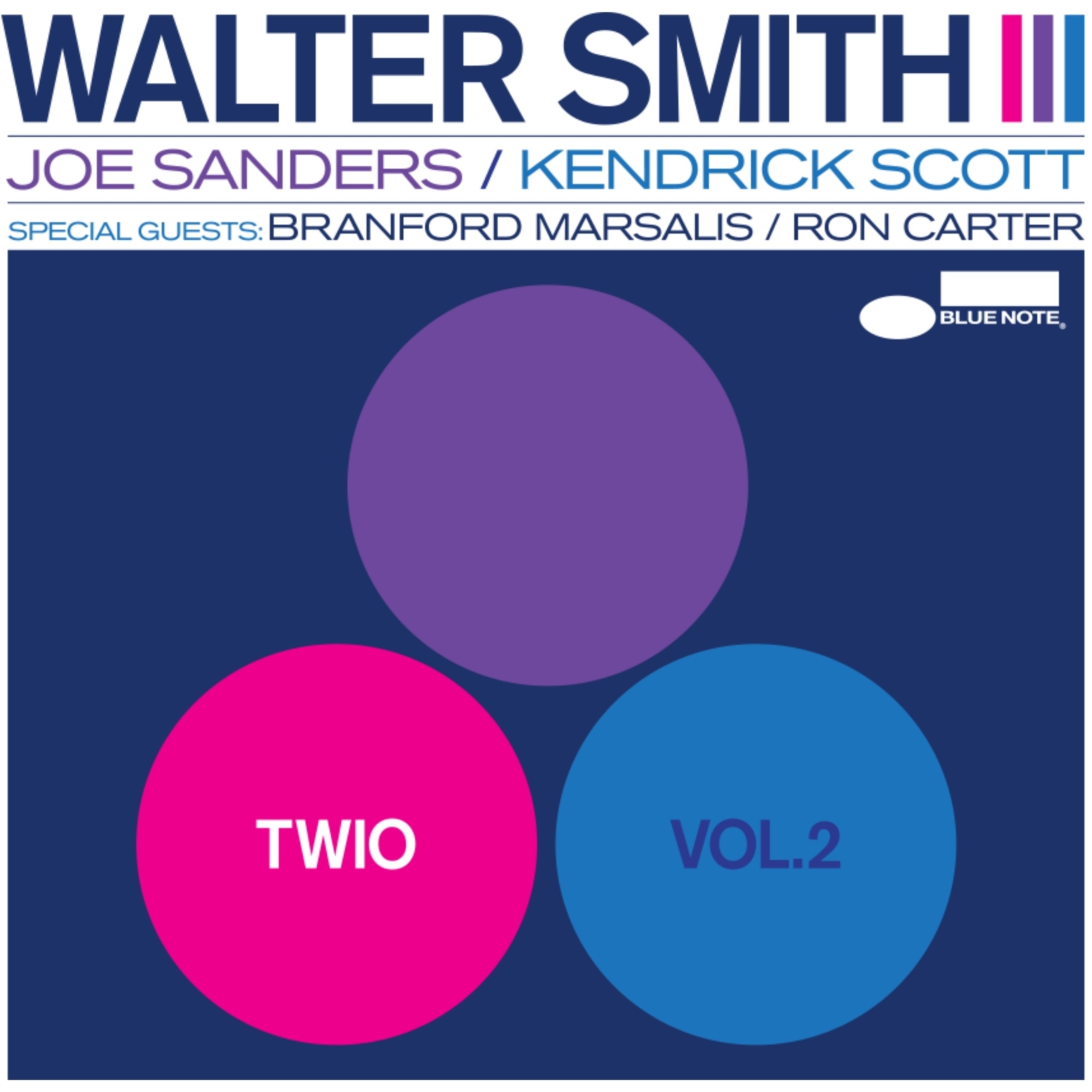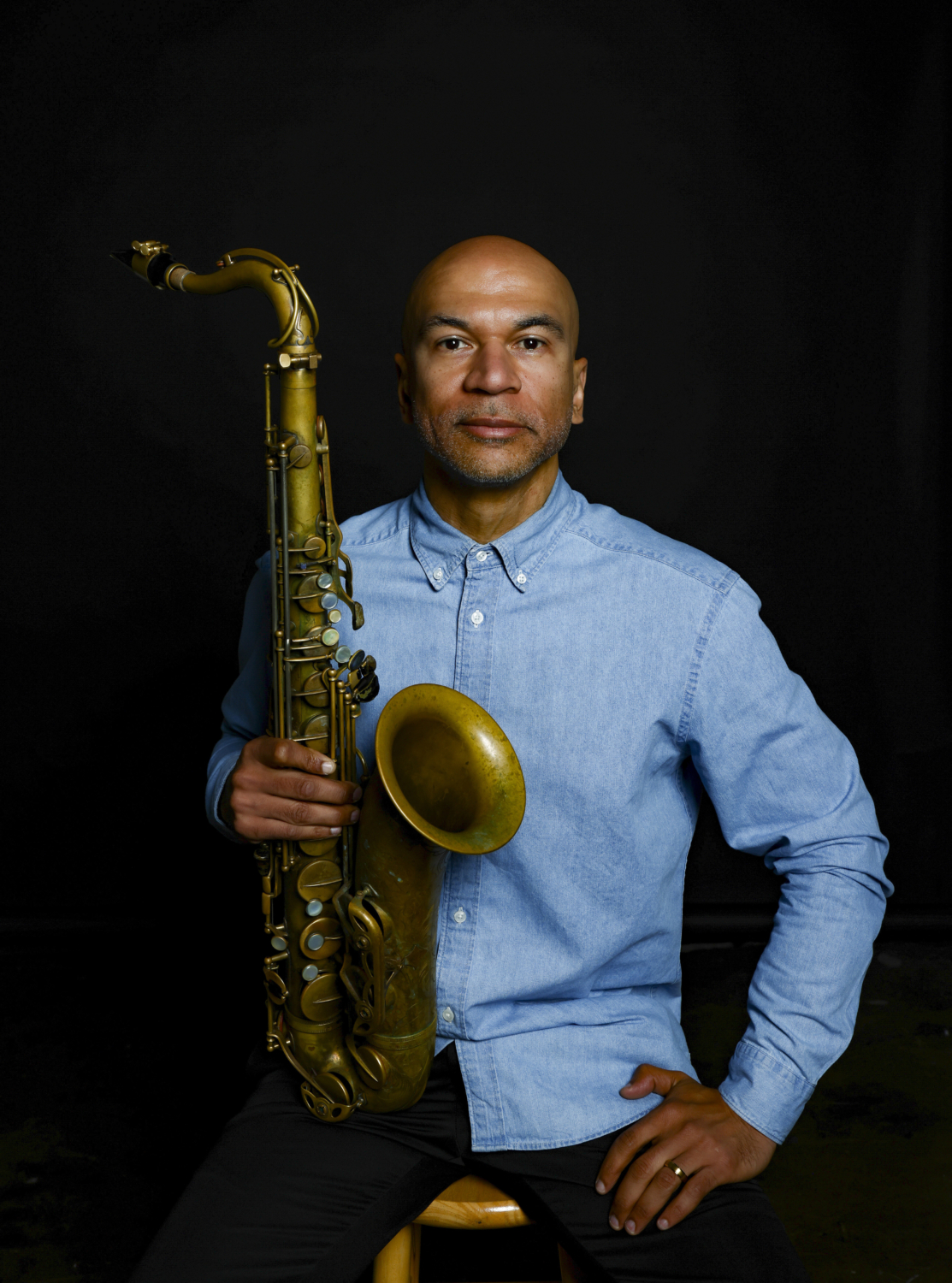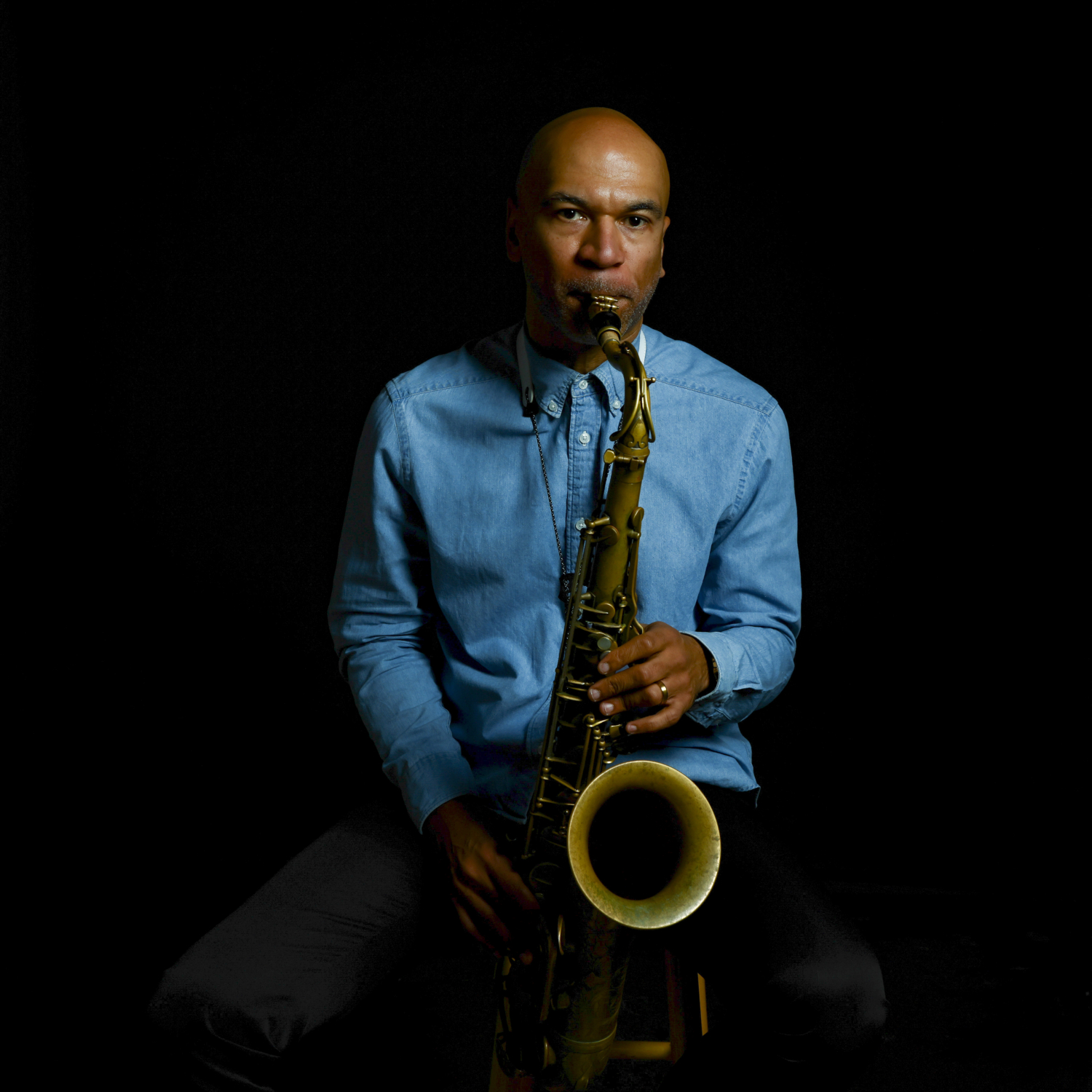
Walter Smith III – Twio Vol. 2
- My Ideal (Newell Chase/Richard A. Whiting) 4:06
- Circus (Louis Alter/Bob Russell) 4:52
- Light Blue (Thelonious Monk) 3:04
- Casual–Lee (Walter Smith III) 6:37
- Lawns (Carla Bley) 3:45
- I Should Care (Sammy Cahn/Axel Stordahl/Paul Weston) 5:19
- Fall (Wayne Shorter) 5:54
- Escapade (Kenny Dorham) 4:38
- Isfahan (Billy Strayhorn/Duke Ellington) 3:32
- Swingin’ At The Haven (Ellis Marsalis) 5:03
1/2/3/5/8: feat. Joe Sanders & Kendrick Scott
4/10: feat. Ron Carter, Kendrick Scott & Branford Marsalis
6/7: feat. Ron Carter and Kendrick Scott
9: feat. Ron Carter
Walter Smith III: tenor saxophone / Joe Sanders: bass / Kendrick Scott: drums
Special Guests: Ron Carter: bass / Branford Marsalis: tenor saxophone (tracks 4 & 10)
Produced by Walter Smith III
Recorded by Andy Taub at Brooklyn Bridge Music, Brooklyn, NY January 13-14, 2025
„Twio“ hieß das fünfte Studioalbum des US-amerikanischen Jazz-Tenorsaxofonisten Walter Smith III, das im Februar 2018 bei Whirlwind Recordings veröffentlicht wurde. Der Titel war eine spielerische Wortschöpfung aus „Trio“ und „Two“. Für sein drittes Blue-Note-Album greift er jetzt das Konzept wieder auf und präsentiert mit „Twio Vol. 2“ ein äußerst gelungenes Album mit klassischen Jazzstücken voll swingender Spielfreude. Das Album besticht durch eine neue Besetzung mit Musikern wie Bassist Joe Sanders und Schlagzeuger Kendrick Scott sowie Gastauftritten der Jazzlegenden Ron Carter am Bass und Branford Marsalis am Tenorsaxofon.
INFO
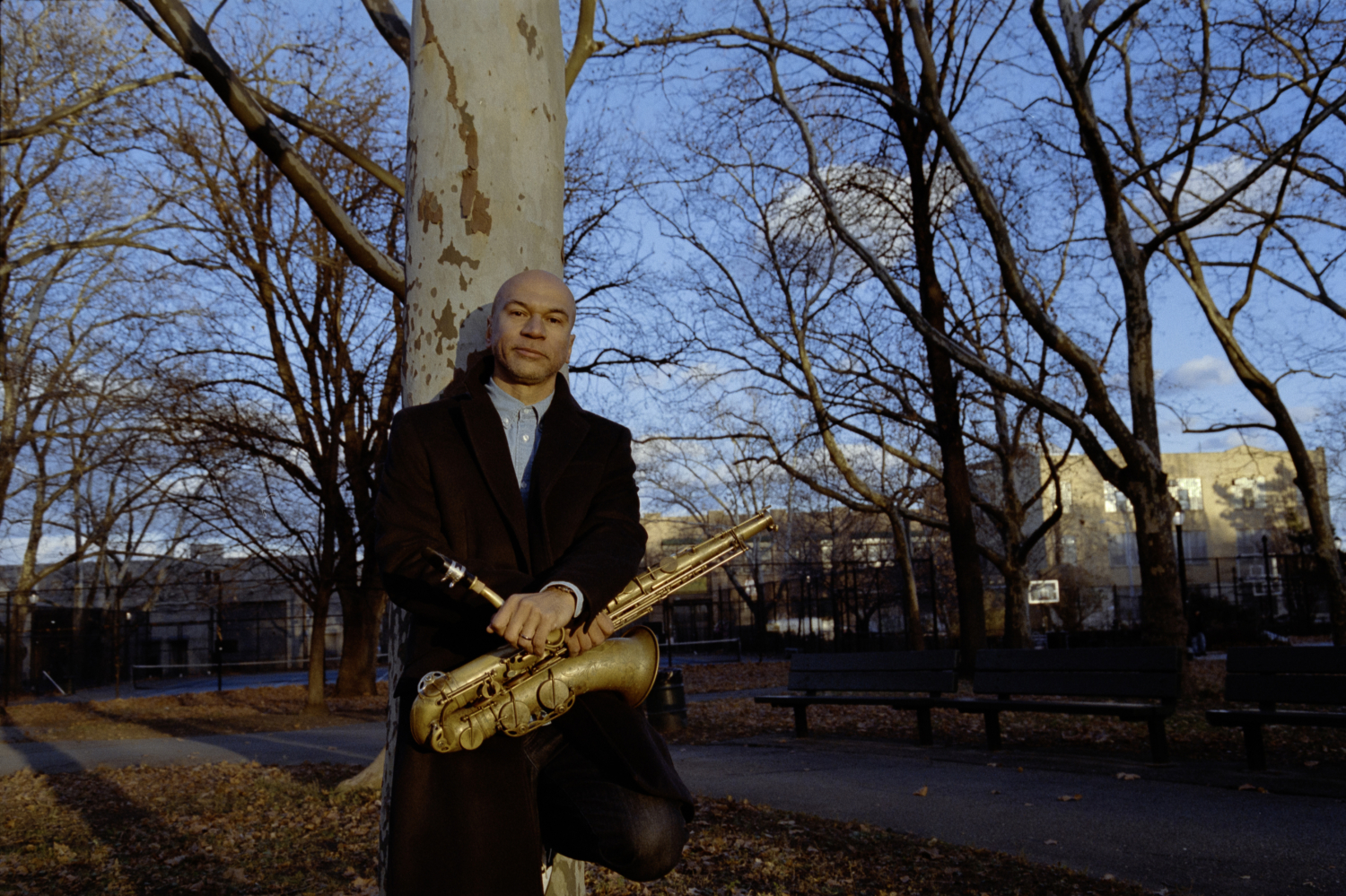
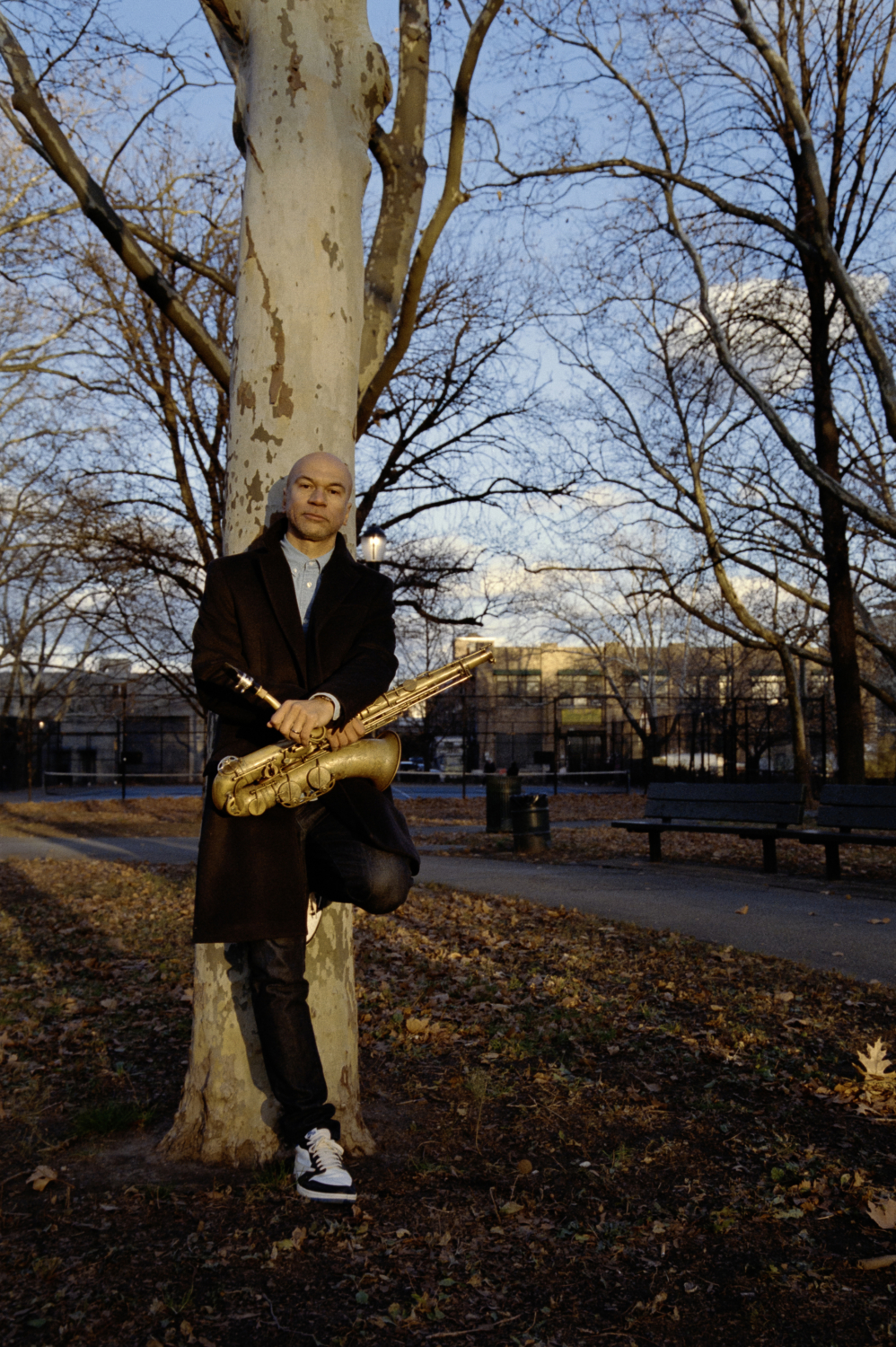
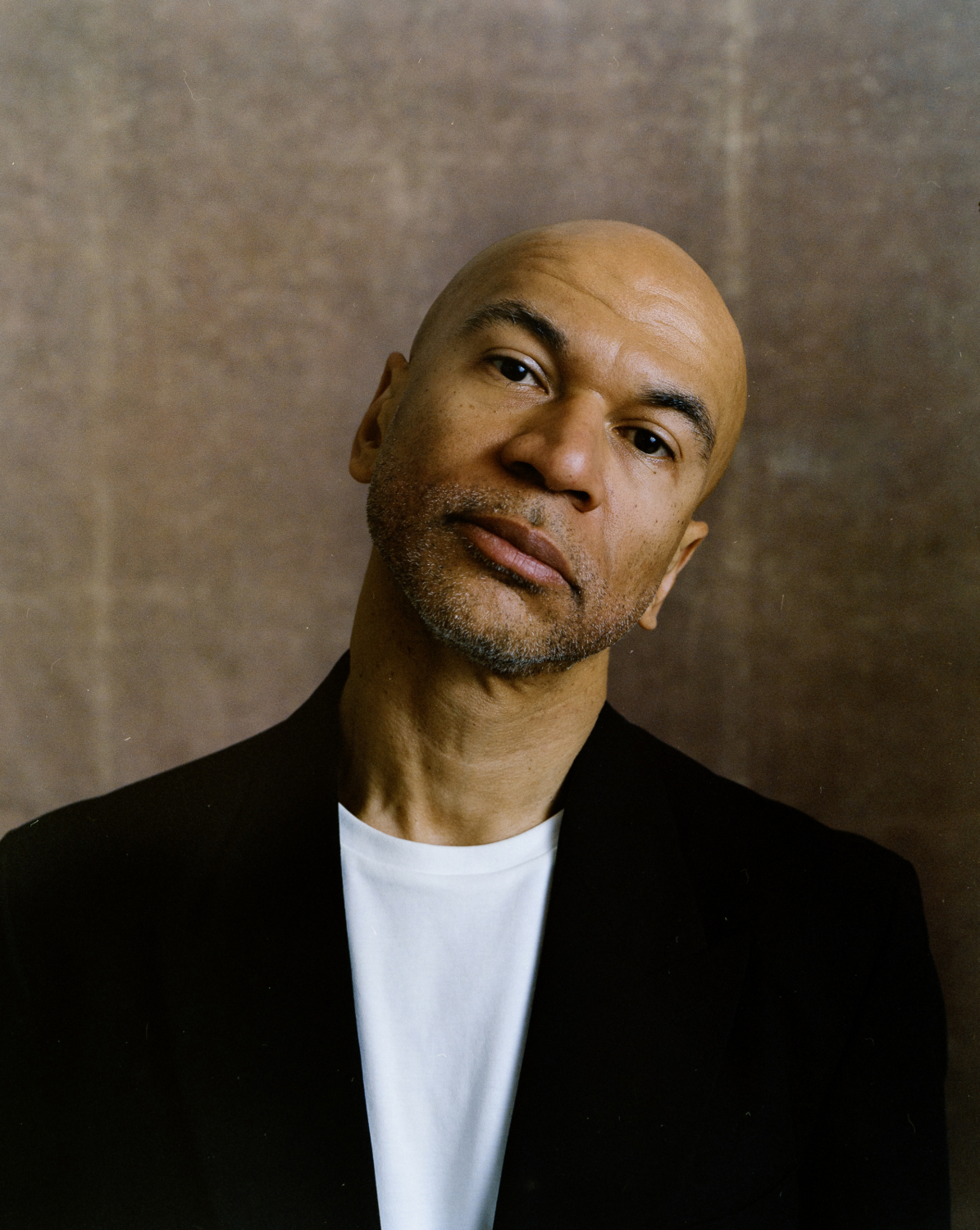
Walter Smith III ranks among the most impressive tenor saxophonists of our time, equally powerful and articulate, with a room-filling depth of sound that’s unforgettable. As an improviser, he suggests how jazz can continue to evolve in the most organic, authentic way possible; he’s thoroughly of this moment but steeped in the wisdom he’s gained through working with giants like Terence Blanchard and Roy Haynes.
Over the past two decades, he’s joined up with an eminent generation of masterful players who double as visionary composers, writing modern, ambitious original music for their own groups and each other’s. Smith’s peer circle has included many of the most compelling artists in current jazz — names like Ambrose Akinmusire, Eric Harland, Jason Moran, Chief Xian aTunde Adjuah, Taylor Eigsti and Matthew Stevens.
But sometimes Smith and his colleagues just want to play. No fuss, no multi-page scores, no intensive rehearsals, and no last-minute calls about who can learn a lot of new music in a little bit of time. Sometimes, they’d rather grab a bunch of smart, durable tunes they grew up loving and go to work.
That’s the spirit behind Twio, Vol. 2, Smith’s new album and his third for Blue Note Records. It features a core trio of Smith, bassist Joe Sanders and drummer Kendrick Scott, along with a pair of bucket-list guests: the bassist Ron Carter, who plays on half of the album’s 10 tracks, and the saxophonist Branford Marsalis, who appears on two. Of the latter, Smith said, “That’s my guy from the time I got serious about playing saxophone.” Carter is also a personal and musical hero to Smith, who remarks on how accommodating but also collaborative the famously prolific bassist was during the sessions. “Ron’s input is like, ‘Don’t just play what you want. Listen to what I’m doing,’” says Smith. “’I have some ideas that may take you in different directions.’”
The album is a more-than-worthy complement to the first Twio volume, released in 2018, which showcased the rhythm tandem of bassist Harish Raghavan and drummer Eric Harland, plus guests Christian McBride and Joshua Redman, another of Smith’s favorite saxophonists. “On Twio, you can tell he’s been peeling back the layers of his art form to focus on the essence,” DownBeat raved.
Vol. 2 carries that remarkable distillation forward. To start, the instrumentation is once again spare and compelling: In a Sonny Rollins-style strolling trio sans piano, the unit can communicate with extrasensory tact, and with seemingly limitless harmonic options up for grabs. When Marsalis joins the frontline, two of jazz’s finest saxophonists engage in the delicate balance of sparring and mutual support that defines the most musical tenor-battle encounters.
Perhaps most inspired is the smartly curated and versatile repertoire, which avoids blowing-session clichés with aplomb. “The goal was to find tunes that are in the standard repertoire, but not the ones that everybody plays all the time,” Smith says. “Tunes that are adjacent to those, that would allow us to play the way we play without trying to be too traditional with it.”
“For most people, myself included, this is a big part of your foundational time,” Smith adds. “You spend basically your whole life learning to play functional harmony and these kinds of forms, in a practice room or just having fun with others. But then professionally, you often explore new directions.” The Twio concept brings this camaraderie to the listening room and provides a window into how brilliant jazz musicianship evolves inside familiar forms.
In the case of Smith and Scott, fans are returned to both artists’ adolescence. Says Smith, “He’s the first person I met at the ice cream social my freshman year of high school, right before I started at Kinder — the High School for the Performing and Visual Arts.” It was 1994, at the Houston institution that also shaped Beyoncé, Robert Glasper, Eric Harland and Jason Moran, among many others. The young musicians became fast friends and started hanging. They’d visit local record shops and listen to their purchases together, all the while learning to play jazz both in and out of class.
Smith met Sanders much later, after the saxophonist had graduated from Berklee and moved to New York. The pair also attended the Thelonious Monk Institute together in Los Angeles, where they shared countless hours of bandstand time. The end result of all this backstory is an astonishingly empathic chemistry. Or, as Smith puts it, “I look at both of them as mind readers.” He also sees them as a perfect example of the dictum that only very special people can make very special musicians — improvisers who are open, creative and dedicated to constant reinvention.
While there’s plenty of melodic and harmonic radiance here, perhaps what’s most staggering is the collective temperament and feel for texture, the way the group’s volume and intensity are held in perfect balance throughout every interaction. These performances are at once thrilling and lived-in, comfortable. “We’ve done a lot of gigs with this trio, and we don’t talk about what we’re gonna play,” says Smith. “We don’t call tunes. You just start playing and then see where it goes.” Carter, a veteran of thousands of recording sessions, is able to sustain this ensemble clairvoyance seamlessly.
The Vol. 2 sessions were equally intuitive, with only a couple takes of each tune, if that. Some of the tune picks — “My Ideal,” “I Should Care,” “Circus” — were simply melodies and changes that Smith digs. Others had deeper personal meaning.
“Casual-Lee,” featuring Marsalis and Carter, lays a new melody atop the harmony to one of Smith’s favorite standards, “East of the Sun (and West of the Moon).” Ellis Marsalis’ “Swingin’ at the Haven” was sourced from 1986’s Royal Garden Blues, one of the many Branford LPs that Smith held dear. (Here as there, Branford and Carter casually burn.) Carla Bley’s “Lawns” is a tune that returned to Smith’s orbit via his fellow Berklee educator Terri Lyne Carrington, who chose it as part of her project New Standards: 101 Lead Sheets by Women Composers.
Thelonious Monk’s “Light Blue” and Wayne Shorter’s “Fall” honor two of the composers that have defined Smith’s musical thinking, in different ways. To Smith, Monk’s tunes are impeccable creative prompts — grounded enough for an improviser to sink his teeth into but open enough to entertain genuine creative imagination. Shorter’s music is more specific and emotional for Smith — each tune evoking a pointed mood or atmosphere that Wayne dictated when he recorded it. Here, Smith gets to perform “Fall” with Carter, who tracked the dreamlike gem with Shorter as part of Miles Davis’ Second Great Quintet.
Smith fell in love with “Isfahan” through Joe Henderson’s 1992 tribute to Billy Strayhorn, Lush Life. “Escapade,” written by trumpeter Kenny Dorham, entered Smith’s book via Henderson’s 1964 album Our Thing, and that wasn’t the only classic Blue Note LP that changed Smith’s life. “The first song I ever learned was ‘Blue Bossa,’ off Henderson’s Page One,” he recalls. “That’s the main reason I wanted to be with the label — because of what all those records meant, and to be a part of that legacy.”
Weitere Infos in unserem Presseportal unter
https://journalistenlounge.de – bitte dort über den Genrefilter „Jazz“ anwählen!
PR Radio
Universal Music Jazz (Deutsche Grammophon GmbH)
Mühlenstr. 25, 10243 Berlin
Blue Note / Universal Music
CD 00602488137966 / LP 00602488137973
VÖ: 06.03.2026